
Text by Irina RUSINOVICH
Fragmentia: Oculations of Reality
Kevin Pineda in conversation with Purplehaze Magazine
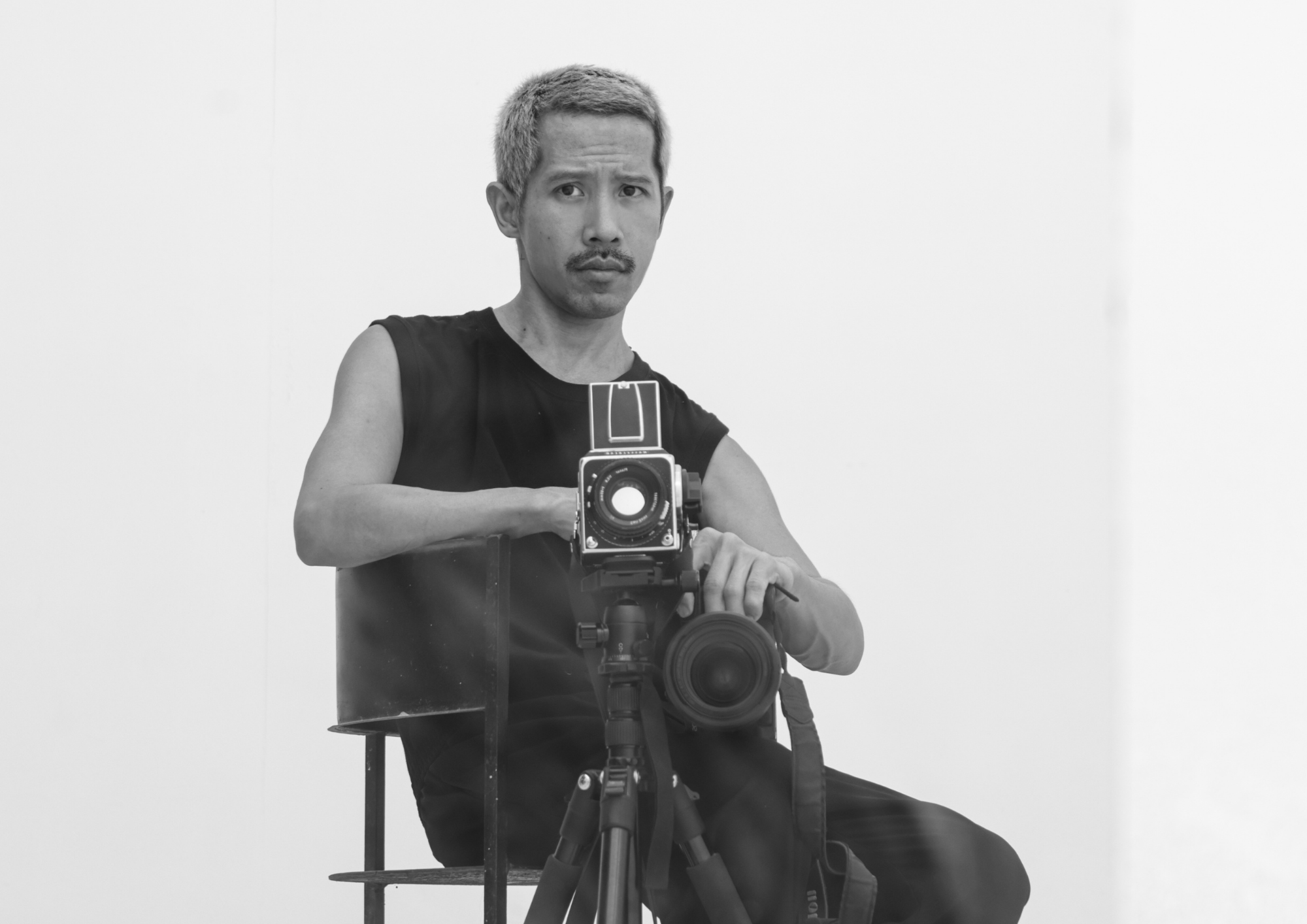
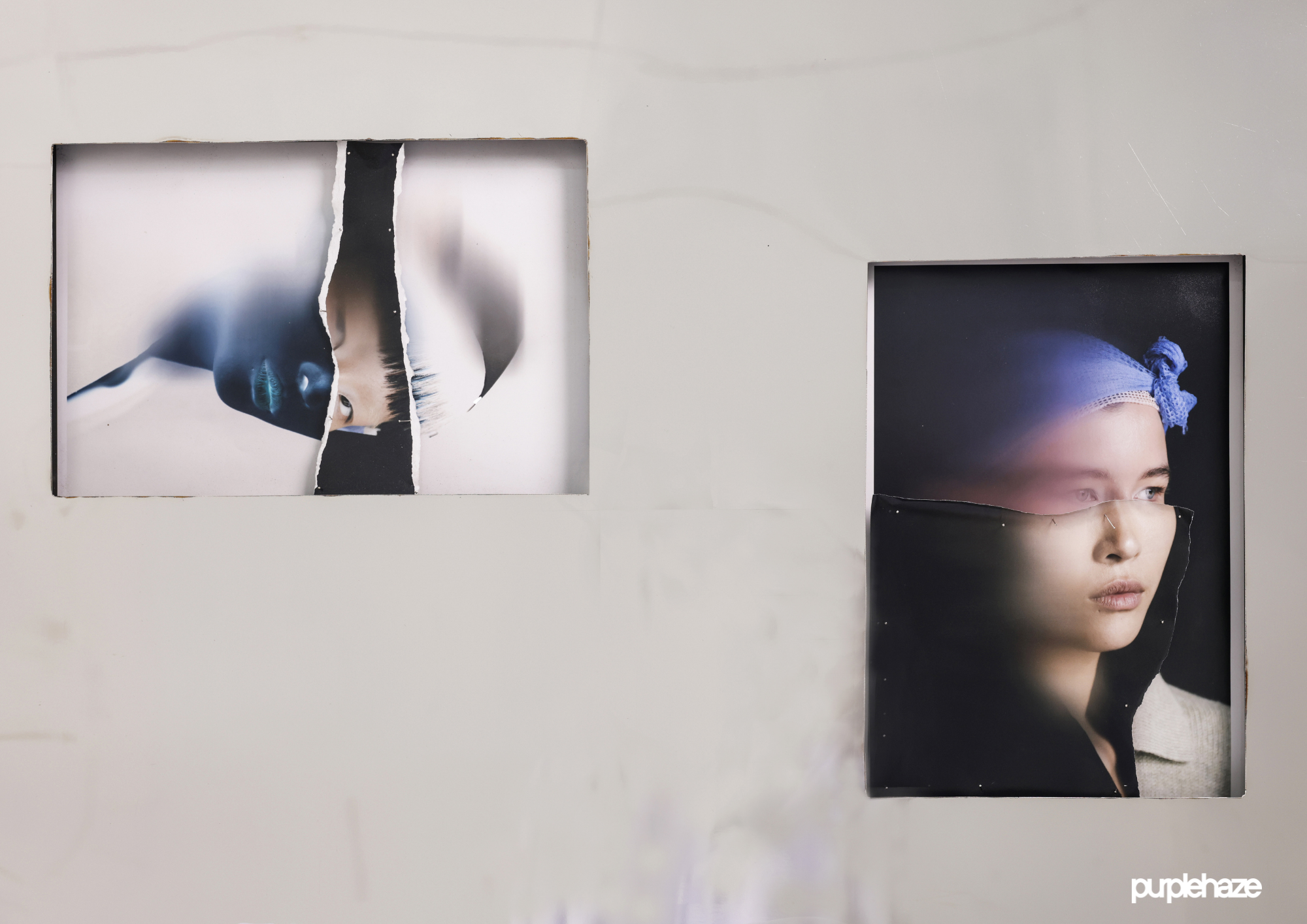
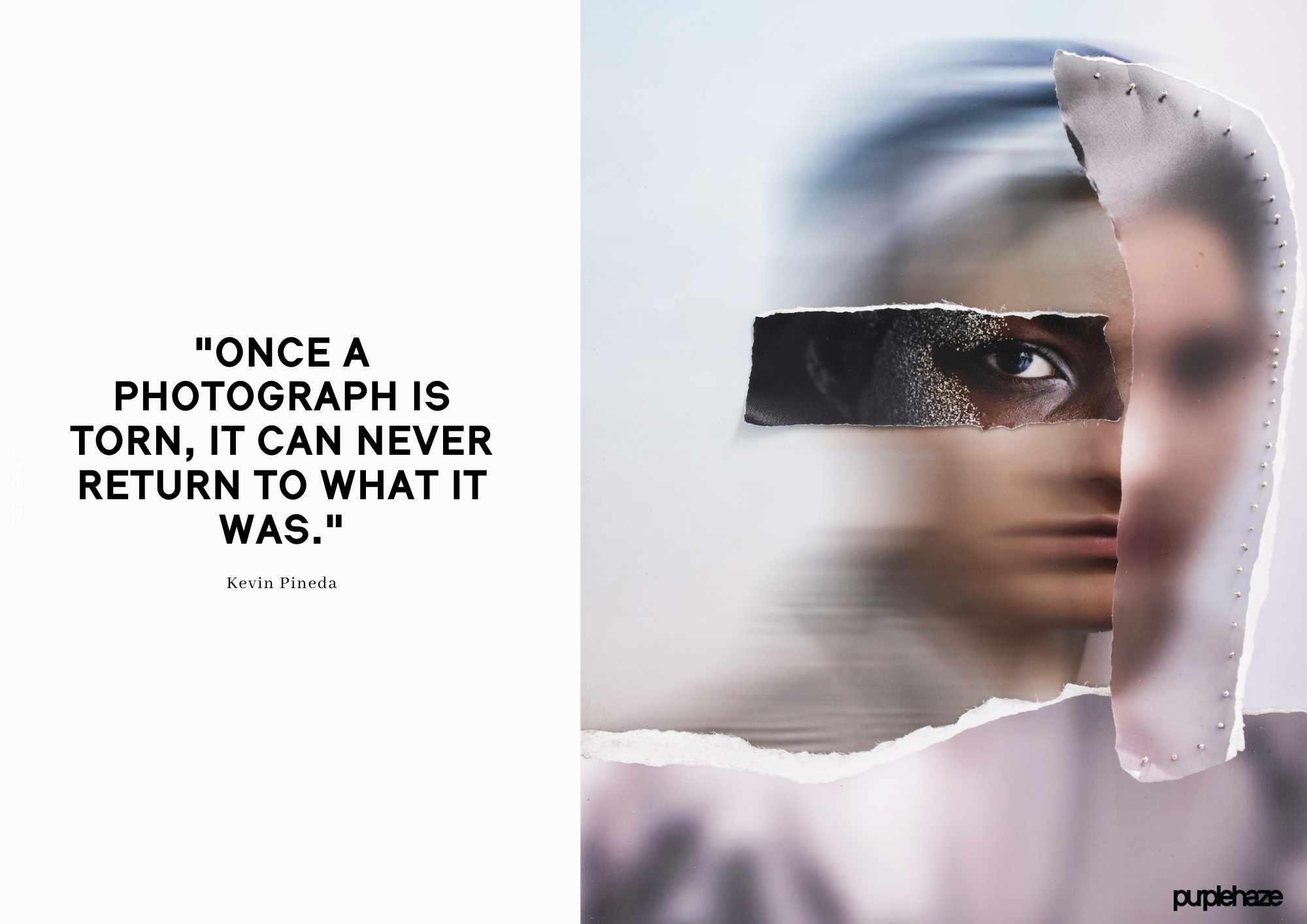
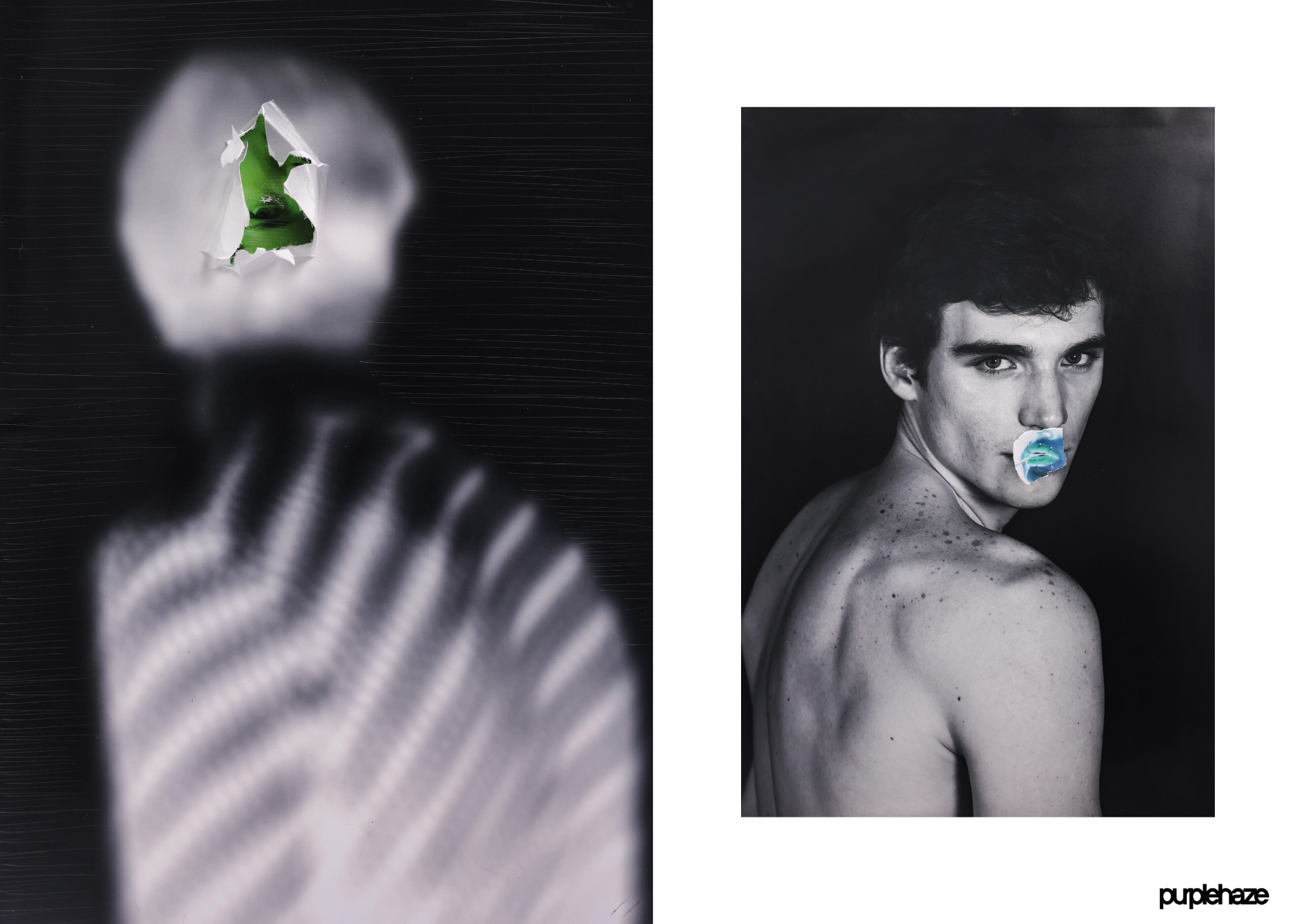
Kevin Pineda starts where most photographers stop: at the delete button. The blurred shot, the misfire, the frame that never made the cut because it was too soft, too strange, or too honest, these are the images he works with. In Fragmentia: Oculations of Reality, he takes those rejected photographs and physically tears, folds, and manipulates them by hand, then mounts them in brushed stainless steel frames that throw your own reflection back at you while you look.
The exhibition ran at SPRUCE Gallery in Manila from May 22 to June 13, 2026, curated by Ric Gindap. The central idea, as Gindap puts it, is simple and a little unsettling: the rejected image might know something the polished one was trained to hide.
Pineda is not a photographer who only photographs. He studied architecture in London, apprenticed at a gallery in Rome that showed Tracey Emin and Anselm Kiefer, ran his own art space near the Colosseum for five years, built furniture in Tallinn, and shot fashion across Milan, Paris, New York, and Manila. All of that ends up in the work whether he intends it or not.
We sent him five questions and here is what he said.
PURPLEHAZE: Fragmentia starts with the rejected photograph, with what usually gets deleted before anyone has to explain it. What does the rejected image know that the selected one has already forgotten?
KEVIN PINEDA: Perfection. Traces of what is expected and what is accepted in photographs are the clear versions and hiding imperfections. I am deleting the idea of perfection and how we are used to see things especially in fashion and what the industry has turned our way of seeing things.
I want to show the photographs that failed to satisfy the expectations of clarity, beauty, or usefulness. Yet they continue to carry traces of what official images leave behind.
PHM: You physically tear, fold, and stress the prints by hand. Any editor could do this in Photoshop in three minutes. Why does it matter that you do it for real?
K.P: Of course, someone could recreate a similar visual effect in Photoshop or with AI in a matter of minutes. But for me, the point isn’t the appearance of the tear; it’s the gesture behind it. Every fold, cut, and tear is irreversible. It leaves a physical trace, and that trace carries intention, time, and risk. Once a photograph is torn, it can never return to what it was.
In a time when so much image-making is instantaneous and endlessly reversible, I wanted to slow the process down and reconnect with the material reality of the photograph. The imperfections are not generated by software, they are lived through the object itself.
Some viewers may assume the work was created digitally, and that’s okay. I don’t feel the need to convince everyone otherwise. What matters is that I know every intervention was made deliberately and by hand. That physical process is inseparable from the meaning of the work. The photograph doesn’t simply represent fragmentation, it has experienced it.
PHM | The steel frame does not just hold the photograph, it competes with it. Why steel specifically, and not wood, not glass, not nothing?
Working with different materials has always been part of my background in design, so using stainless steel felt like a natural extension of my practice, especially for Fragmentia. I’m drawn to its contradictions: it’s a material that is incredibly strong, yet it can appear delicate. It’s cold, rigid, and resilient, always holding its form. In contrast, the photographs are soft, blurred, fragmented, and fragile. That tension between permanence and vulnerability became central to the work.
Interestingly, steel wasn’t part of the original plan. It was a last-minute decision that emerged from a practical problem: I wanted to create a structure that felt light while remaining physically strong. As I worked with it, I realized the material was doing much more than supporting the photographs, it was reinforcing the ideas behind them.
Using steel also became a way of questioning how photography is traditionally presented. Instead of placing photographs behind glass in conventional wooden or aluminum frames, I wanted them to exist as physical objects and installations rather than images confined within a frame. It was a conscious decision to move away from familiar exhibition conventions.
Coming from Asia, where photography is often expected to be presented in standard frames behind glass, this felt like a quiet act of resistance. I wanted to suggest that there are other ways of thinking about photography and exhibiting images. Experimentation shouldn’t be something artists are hesitant to pursue because of established expectations or prevailing trends. If Fragmentia challenges the photograph itself, it should also challenge the systems and conventions through which photography is usually seen.
PHM | You have trained as an architect, worked in professional kitchens, run an art space in Rome, built furniture in Tallinn, and now you are making sculptural photographs in Manila. What is actually connecting all of this, or are you still figuring that out?
K.P | For a long time, I thought those experiences were separate chapters of my life. Looking back now, I realise they’ve all been preparing me for the work I’m making today.
Architecture taught me to think about space and how people move through it. Design taught me to respect materials and understand that every material has its own language and behaviour. Running an art space in Rome showed me how artists think, how exhibitions are built, and how conversations around art are created. Working in fashion and photography sharpened my eye for composition and image-making, but it also made me aware of how quickly images are consumed and forgotten.
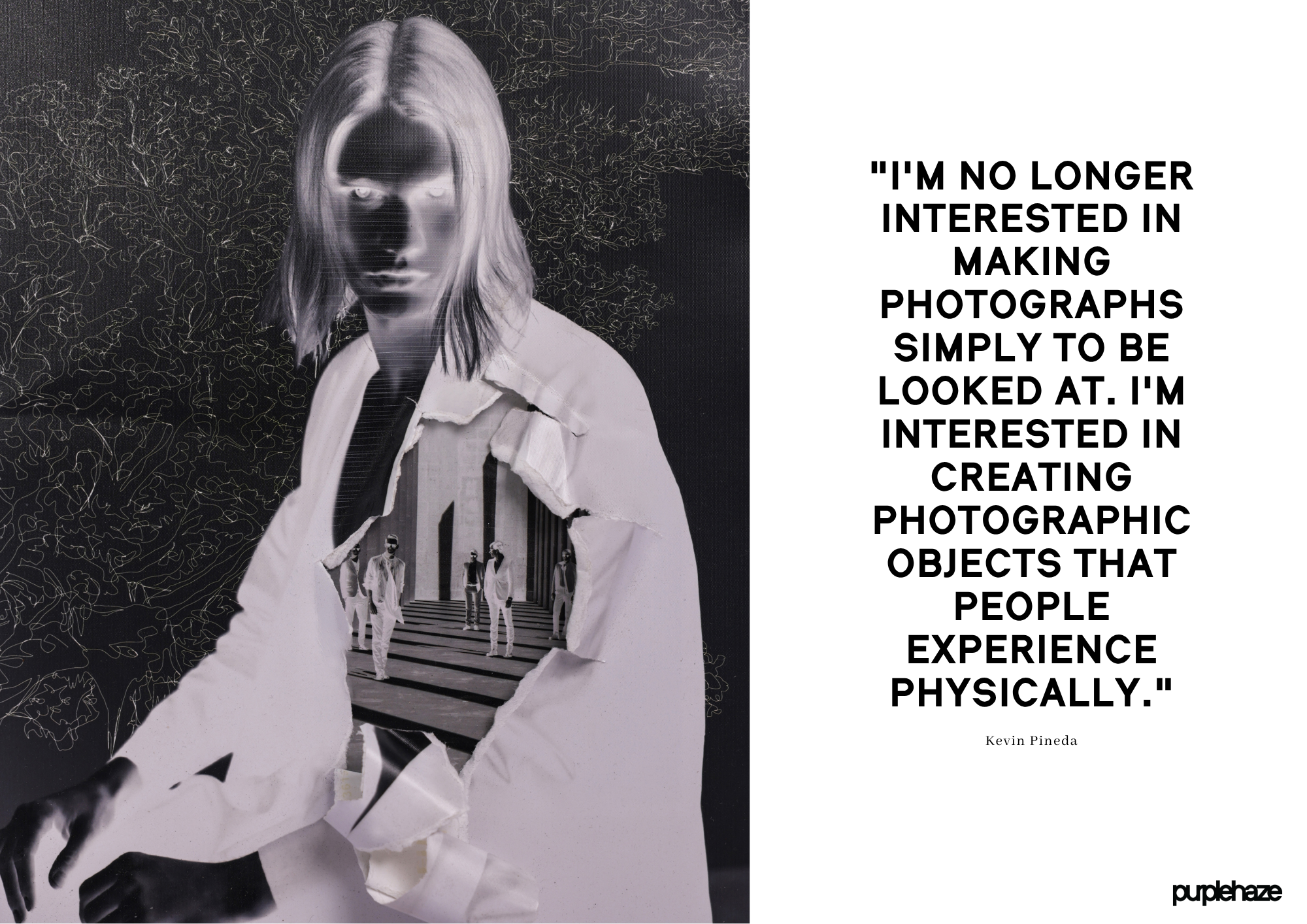
All of those experiences come together in Fragmentia. I’m no longer interested in making photographs simply to be looked at. I’m interested in creating photographic objects that people experience physically, where materials, images, and space all contribute to the meaning of the work.
On a personal level, this project also helped me rediscover why I wanted to make art in the first place. There was a period when I felt overwhelmed by the constant pace of fashion, social media, and the pressure to keep producing images. Everything began to feel repetitive, and I lost sight of what I wanted to say.
Fragmentia became my way of stepping away from that noise. Instead of chasing perfection or trends, I started creating work that felt honest to my own experiences and questions. In many ways, this project helped me find my voice again. It reminded me that I don’t have to follow expectations, I can build my own visual language and my own world through the work I make.
Follow KEVIN for more of his works