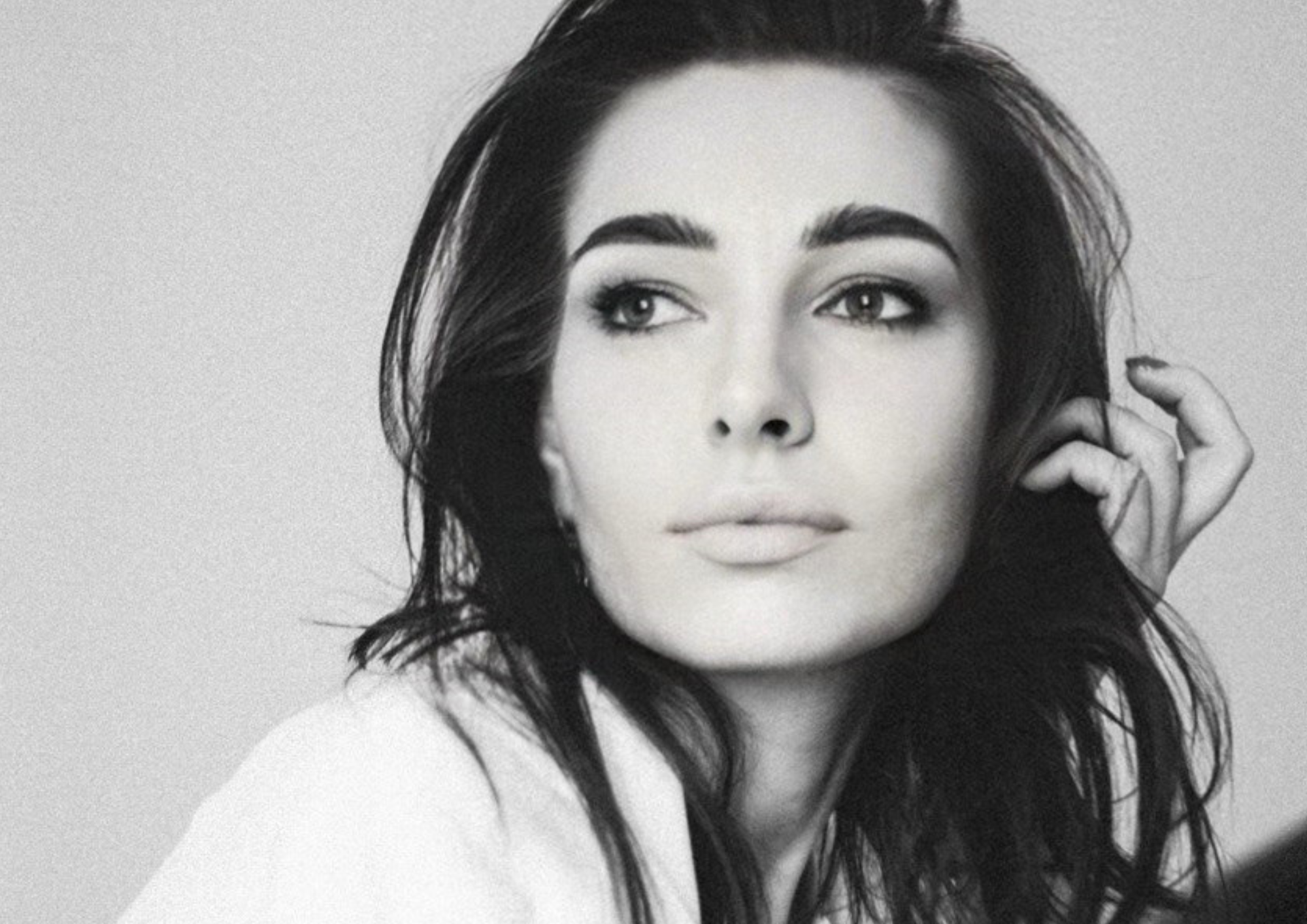
Text by Irina Rusinovich
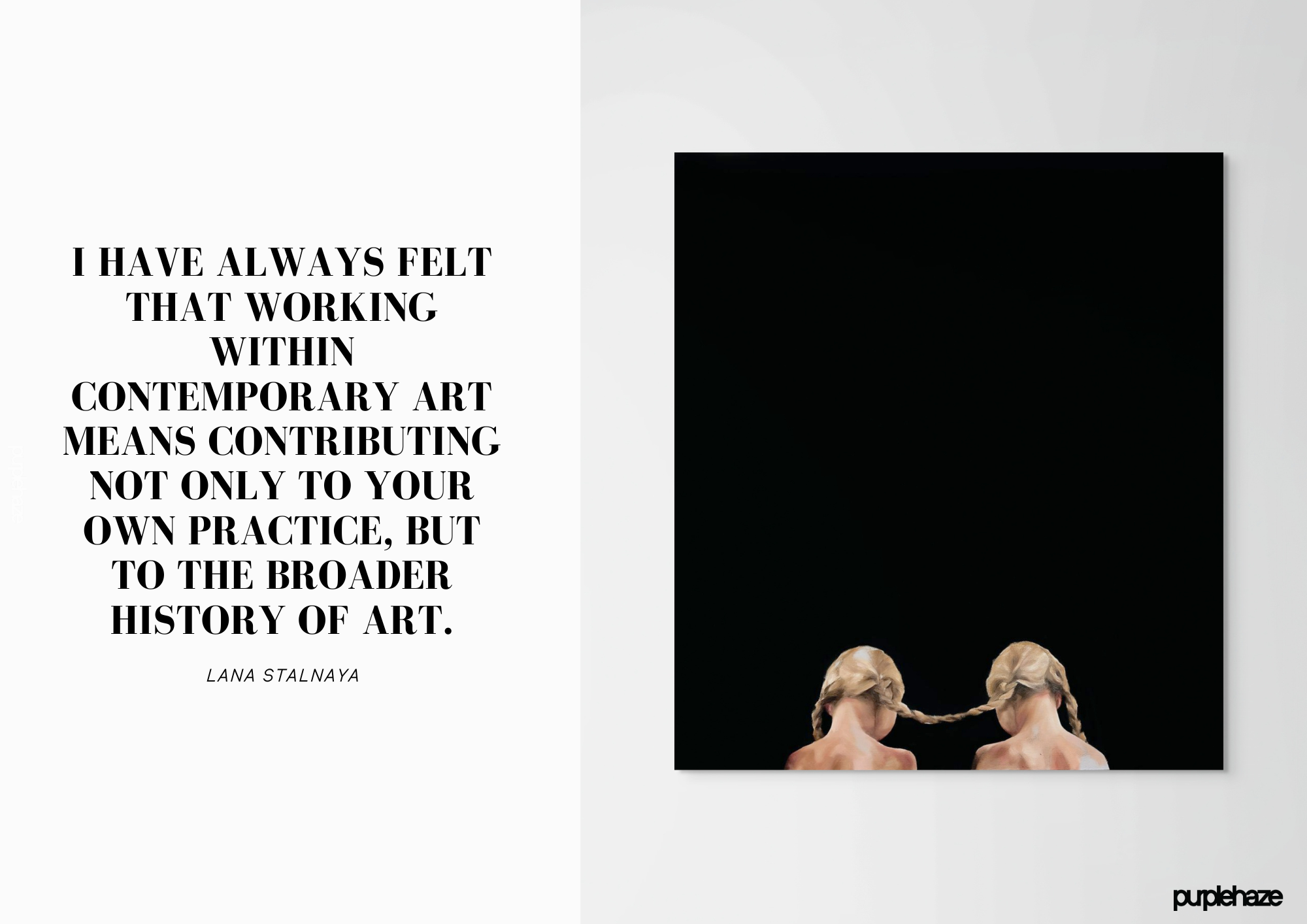
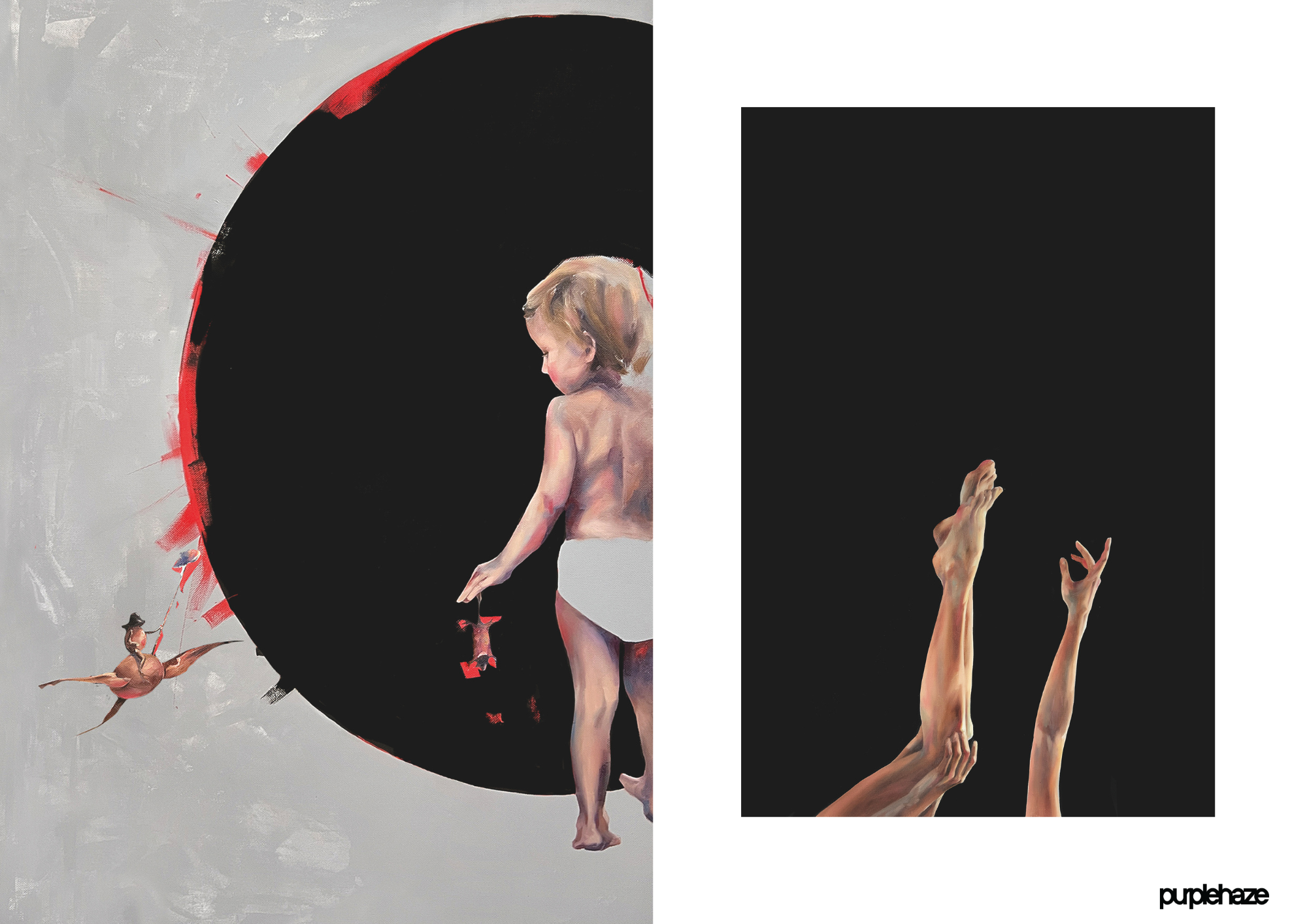
Lana Stalnaya approaches art as a system of signs fragile, layered, and never fully resolved. Moving between faith and doubt, structure and intuition, she constructs visual languages that echo larger historical, metaphysical, and emotional processes. Her practice unfolds as a search rather than a statement: a quiet investigation into fate, freedom, and the role of the individual within forces that exceed personal control. Drawing from science, religion, literature, and lived experience, Stalnaya treats art as a form of emotional engineering a way to navigate uncertainty without the illusion of fixed answers.
In this conversation, she reflects on trauma as a generative force, discipline as a method of survival, and the subtle systems that allow meaning to surface where certainty dissolves.
Your works often feel like an attempt to decode the hidden structure of the world. What became the personal starting point of this search intuition, faith, or doubt?
Most likely, the tension between faith and doubt. At some point, almost everyone reaches a moment where questions emerge naturally: Why is it this way? What is the purpose? When this moment arrived for me something I now see as a form of luck I began searching for answers through practice. Practice has always been my primary way of thinking, processing emotions, and moving through life.
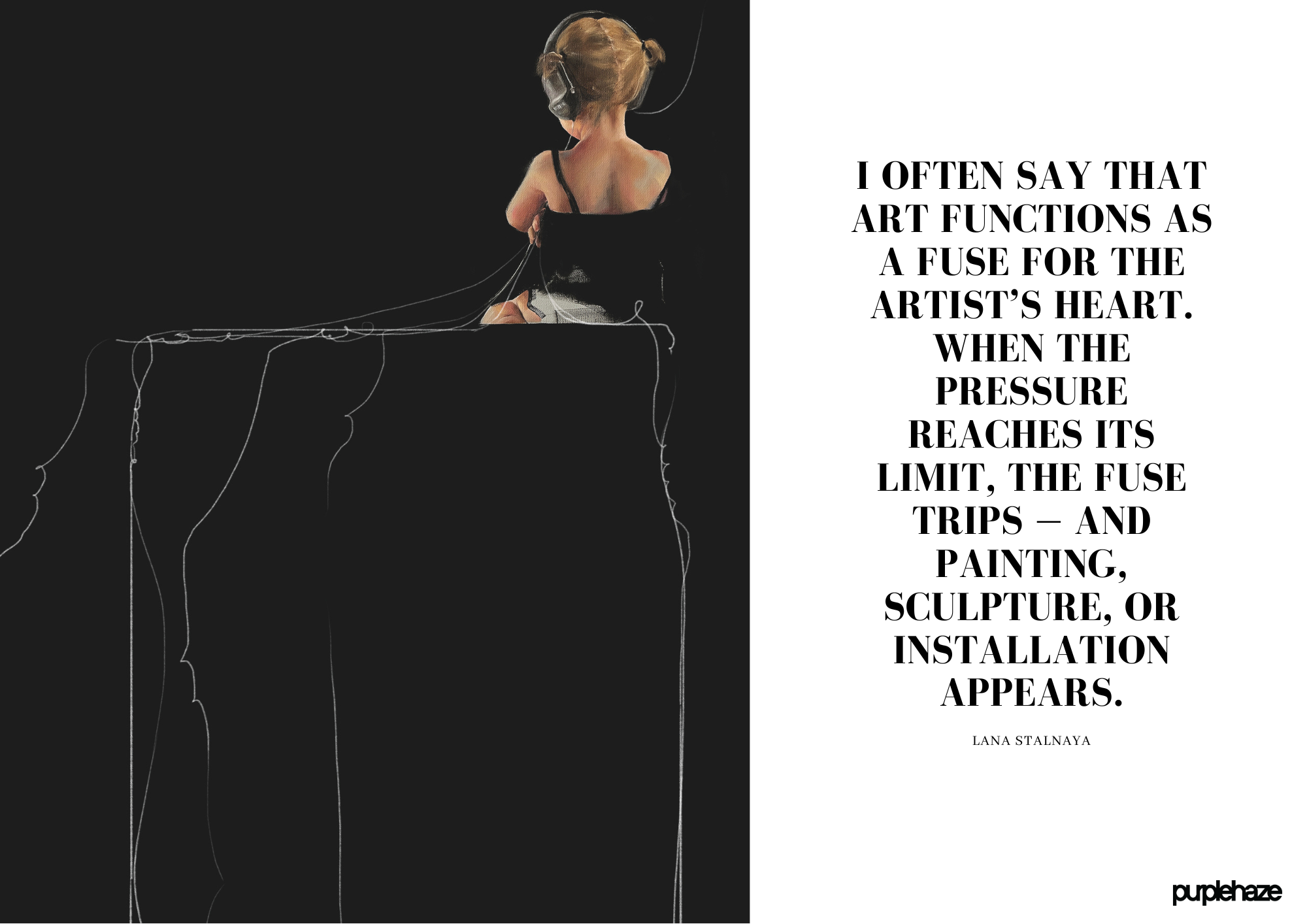
I often say that art functions as a fuse for the artist’s heart. When the pressure reaches its limit, the fuse trips and painting, sculpture, or installation appears.
In the BABYLON series, you combine matter and metaphor from coal and acrylic to pearls. Does this fusion speak more about the collapse of civilization or its reconfiguration?
For me, it exists somewhere in between as civilization in its everyday state. At times, the universe advances like a dark mass: a hurricane, a flood. Humanity retreats. Then silence comes, and people raise their heads, regain strength, take root, initiate industrial revolutions. And then another disruption follows. This oscillation feels inevitable.
Pearls hold a particular meaning for me. They are symbols of power and mourning at once monarchy and tears. A pearl is born from trauma; without it, it never becomes precious. A mollusk coats a foreign grain of sand with layer after layer, transforming irritation into value. This process mirrors both human development and the evolution of civilizations.
Fate is a recurring theme in your work. Do you believe individuals can alter the course of events, or is everything already encoded?
This question sits at the core of my practice. For a long time, I believed strongly in fate in predetermined rails that both protect and constrain us. You can accelerate or slow down, but the direction remains fixed.
That belief shifted after one unexpected yet positive event disrupted my understanding of my own destiny. It led me to ask: What if there are no rails at all? The sensation was unsettling and liberating at once. Suddenly, you are the director like a self-governance day in elementary school. Yet the fear does not vanish.
From that point onward, I began intuitively searching for alternative systems a kind of navigation without tracks. Perhaps more like air traffic control than railways.
Your figures balance between science and mysticism. Do you have an artist’s ritual that helps you reach the right state?
At times it feels as if the images find me themselves. In reality, they have usually existed in my mind long before. I live with an idea, turn it over repeatedly. It might originate from a fragment of text, an isolated event, something seemingly insignificant.
Then, at some point, an image appears and I recognize it immediately. Everything aligns.