Category

/ART/

Lyceum Club Femenino

By /ART/, /FASHION/, /NEWS/

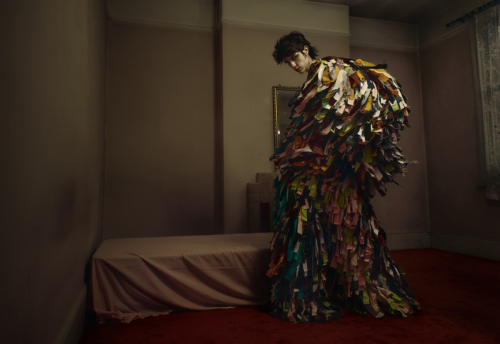
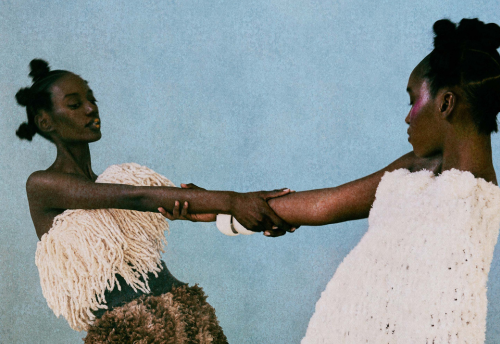
This editorial, titled “Lyceum Club Femenino,
” takes its name from the association of the
same name that emerged in the city of Madrid in the 1930s.
This cultural association aimed to promote education, culture, and the active
participation of women in the public sphere as well as in political and educational
institutions. The Lyceum was not merely an association but an entire movement,
contemporary with Las Sinsombrero and with a series of artistic collectives determined to
change the social paradigm of the time.
For this reason, this editorial does not seek solely to replicate the stylistic elements typical
of that era, but rather to understand and approach the historical and artistic moment in
which this space emerged. It was developed by Spanish women writers and painters from
1926 to 1939. Furthermore, it seeks to pay tribute to the way these women chose to occupy
space and shape their public image at a time when society expected them to be “angels
of the home.
” In the face of this imposition, they chose instead to make themselves visible
and claim their place in the public sphere.
Keywords: 1930s, Madrid, women’s emancipation, space and dependence.

Read More

The Distance Between Us

By /ART/, /NEWS/, /VIDEO/

The Distance Between Us features actors Ema Sofia and Hugo Nicolau, shot in Ericeira, Ema’s hometown, which informs the narrative.

The story explores two forms of separation: the distance between who we’ve become and where we come from, and the ongoing divide between male and female roles in society.

Ema moves through male-dominated spaces, such as the church and fishing harbour, where her relationship with Hugo unfolds as a subtle power dynamic. There’s a sense of closeness yet also distance, a subtle push and pull that leads Ema towards independence.

I have included the link to the accompanying fashion film in the attached credits document. It can also be viewed here – drive.google.com/drive/folders/1exUv51C3w-mOMv14Bdkd5hCfG4AmMT7l?usp=drive_link

The film is optional to include.

For selected looks, two images are provided. These images are intended to work as a pair as part of the concept, however you are welcome to select a single image per look if preferred.

Please note that the styling focuses primarily on Ema as the central character; Hugo’s look remains mostly consistent throughout.

Read More

VELVET SILENCE

By /ART/, /NEWS/

VELVET SILENCE

V E R O N I K A  R I J E , m o d e l @ v e r o n i k a _ r i j e

f r o m N E X T M A N A G E M E N T , a g e n c y @ n e x t p a r i s

E M M A N U E L L E  C O R R E , p h o t o g r a p h e r @ _ e m m a c o r r e

T E O  B E N O I T O N , s t y l i s t @ t e o _ b n t

T A T I A N A  G A G A E V A , h a i r a n d m a k e – u p @ g a g a e v a m u a

left | RAPHAEL TRABAND Dress  JOLI PNJ Ring YENAD STUDIO Earrings  VINTAGE Gants right | RAPHAEL TRABAND Dress

INES PINEAU Corset, Jewelry  NORR Dress IN HOUSE BLEND Bralette Left |CAPRICE Tights VINTAGE Shoes

left |RAPHAEL TRABAND Dress  INES PINEAU Earrings  right | CHRISTOPHER ZUCCO Top  LANA HELEY Short BRILLANTE Shoes

left | CHRISTOPHER ZUCCO Top  LANA HELEY Short BRILLANTE Shoes | RAPHAEL TRABAND Dress  JOLI PNJ Ring YENAD STUDIO Earrings  VINTAGE Gloves

IN HOUSE BLEND Dress SIDONIE PARIS Shirt INES PINEAU Earrings | INES PINEAU Corset, Jewelry — NORR Dress IN HOUSE BLEND Bralette

RAPHAEL TRABAND Dress

In conversation with artist | Sergey Blockin

By /ART/, /NEWS/

There’s something disarming about Sergey Blokh’s world where realism slowly dissolves into dream logic, and simple, familiar things suddenly start to whisper. His paintings turn everyday objects into carriers of mystery, irony, and emotional charge.
We spoke with Sergey about how magic slips into the mundane, about color as intuition, and about the pleasure of building worlds where consciousness and the subconscious meet halfway.
Your works exist between realism and magic, ordinary things suddenly gain symbolic power. What makes an object “worthy” of entering your painterly space?
The subject or phenomenon I choose must be understandable and recognizable to the viewer. Simple, everyday objects allow the composition to remain clear and “readable.”

Read More

PROJECT: BIRDS OF PARADISE | Marta Kosiorek

By /ART/, /NEWS/

BIO
I am a freelance photographer living in Berlin.I completed the prestigious one-year Sputnik Photos Mentoring Program in Warsaw, Poland. My main area of work is documentary photography shifting toward magical realism.

My long term project about polish prisons “Three square meters” have been selected for the 2017 Aperture Summer Open, On Freedom in Aperture Gallery and also received KTR 2017 (prestigious Polish Advertising Contest) nomination for Best Personal Photography Project . 
In 2019 my work was a part of Der Greif Blame the Algorithm 12 issue guest edited by Oliver Chanarin and Adam Broomberg. 
My work was also a part of a group exhibition in the Stadtmuseum München, Germany conceived around Der Grief issue 12 In Munich, Germany.

Read More

In conversation with Lana Stalnaya

By /ART/, /INTERVIEW, /NEWS/

Text by Irina Rusinovich 

In conversation with artist Lana Stalnaya

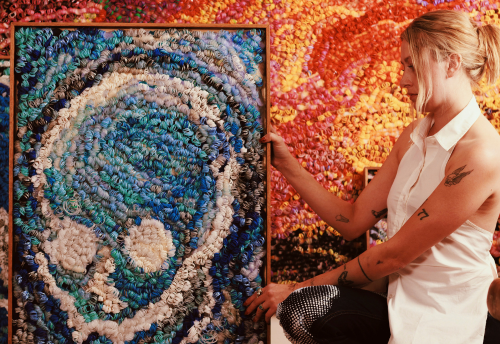
Lana Stalnaya approaches art as a system of signs fragile, layered, and never fully resolved. Moving between faith and doubt, structure and intuition, she constructs visual languages that echo larger historical, metaphysical, and emotional processes. Her practice unfolds as a search rather than a statement: a quiet investigation into fate, freedom, and the role of the individual within forces that exceed personal control. Drawing from science, religion, literature, and lived experience, Stalnaya treats art as a form of emotional engineering  a way to navigate uncertainty without the illusion of fixed answers.

In this conversation, she reflects on trauma as a generative force, discipline as a method of survival, and the subtle systems that allow meaning to surface where certainty dissolves.

Your works often feel like an attempt to decode the hidden structure of the world. What became the personal starting point of this search  intuition, faith, or doubt?

Most likely, the tension between faith and doubt. At some point, almost everyone reaches a moment where questions emerge naturally: Why is it this way? What is the purpose? When this moment arrived for me  something I now see as a form of luck  I began searching for answers through practice. Practice has always been my primary way of thinking, processing emotions, and moving through life.

I often say that art functions as a fuse for the artist’s heart. When the pressure reaches its limit, the fuse trips  and painting, sculpture, or installation appears.

In the BABYLON series, you combine matter and metaphor  from coal and acrylic to pearls. Does this fusion speak more about the collapse of civilization or its reconfiguration?

For me, it exists somewhere in between as civilization in its everyday state. At times, the universe advances like a dark mass: a hurricane, a flood. Humanity retreats. Then silence comes, and people raise their heads, regain strength, take root, initiate industrial revolutions. And then another disruption follows. This oscillation feels inevitable.

Pearls hold a particular meaning for me. They are symbols of power and mourning at once monarchy and tears. A pearl is born from trauma; without it, it never becomes precious. A mollusk coats a foreign grain of sand with layer after layer, transforming irritation into value. This process mirrors both human development and the evolution of civilizations.

Fate is a recurring theme in your work. Do you believe individuals can alter the course of events, or is everything already encoded?

This question sits at the core of my practice. For a long time, I believed strongly in fate in predetermined rails that both protect and constrain us. You can accelerate or slow down, but the direction remains fixed.

That belief shifted after one unexpected yet positive event disrupted my understanding of my own destiny. It led me to ask: What if there are no rails at all? The sensation was unsettling and liberating at once. Suddenly, you are the director  like a self-governance day in elementary school. Yet the fear does not vanish.

From that point onward, I began intuitively searching for alternative systems  a kind of navigation without tracks. Perhaps more like air traffic control than railways.

Your figures balance between science and mysticism. Do you have an artist’s ritual that helps you reach the right state?

At times it feels as if the images find me themselves. In reality, they have usually existed in my mind long before. I live with an idea, turn it over repeatedly. It might originate from a fragment of text, an isolated event, something seemingly insignificant.

Then, at some point, an image appears  and I recognize it immediately. Everything aligns.

Your etching cycle SPARTA carries a strong sense of discipline and control. How do you balance structure and spontaneity?

Structure matters deeply to me. Discipline, system, order, perhaps my engineering background still plays a role. In contemporary, research-driven art, structure allows you to move forward rather than remain static.I have always felt that working within contemporary art means contributing not only to your own practice, but to the broader history of art. Each work is a step  or at least half a step  toward something new. At the same time, impulse remains essential. Without it, creation loses its charge.Recently, I came across a phrase that resonated strongly: the artist as an emotional engineer. It feels accurate.

You studied at Sotheby’s Institute of Art and the Moscow School of Contemporary Art. What stayed with you, and what did you have to release?

Both institutions share a deep alignment in their approach. Meaning, ideas, innovation, and dialogue sit at the center. These are strong, demanding environments.What I value most is the absence of a traditional “master-apprentice” model. Instead of adopting someone else’s visual language, artists are encouraged to claim their own. These spaces help articulate personal modes of thinking and expression rather than overwrite them.

If your artistic path were a system of clues, what key would you leave for those just beginning?

Environment matters immensely. Being surrounded by like-minded people, within an institution or community, provides both support and momentum. Artists often isolate themselves deeply within their practice.Art cannot exist in isolation. It needs to be brought into dialogue with viewers, peers, the world. Your work does not walk on its own. It needs you. And finally, speak openly about what truly matters to you  and only that.

Artist Spotlight | Darya Pasechnik

By /ART/, /INTERVIEW, /NEWS/

What I call “presence” is more related to my approach to creating images. I used
to seek inspiration in the digital, phantom space — in visual flows and screen
artifacts. Now I feel an increasing attraction to the physical world — to its
imperfect objects, accidental scenes, and the quiet mysticism that arises in
space when you simply observe.

Read More