Interview by Irina RUSINOVICH
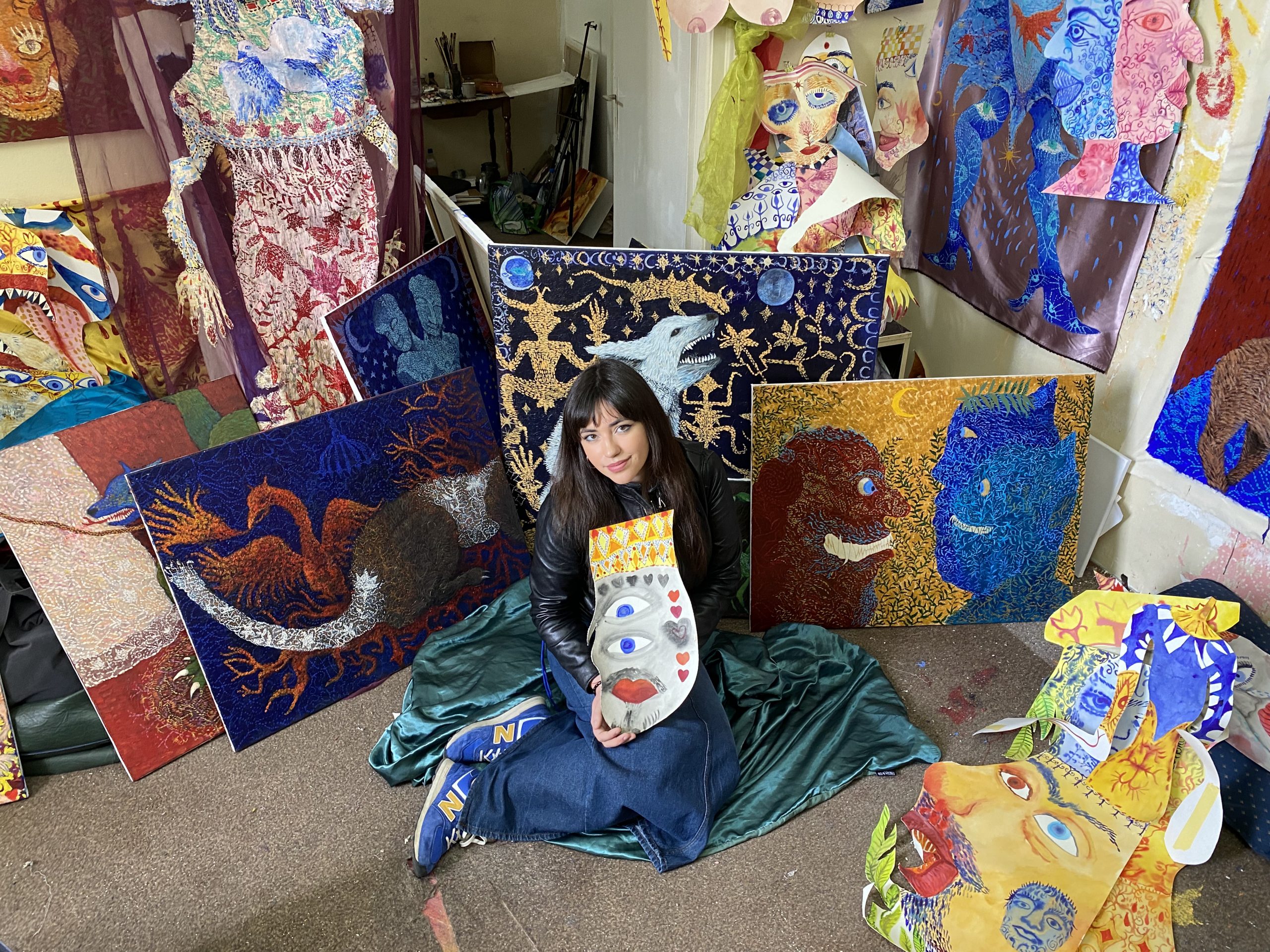
/ Teodora Nešković / is a painter and that is the first thing to say, as everything that happens in her work happens from inside that decision. She graduated from the Faculty of Fine Arts in Belgrade and is now in the middle of her PhD on the same painting department a long, deliberate stay inside the discipline rather than an escape from it.
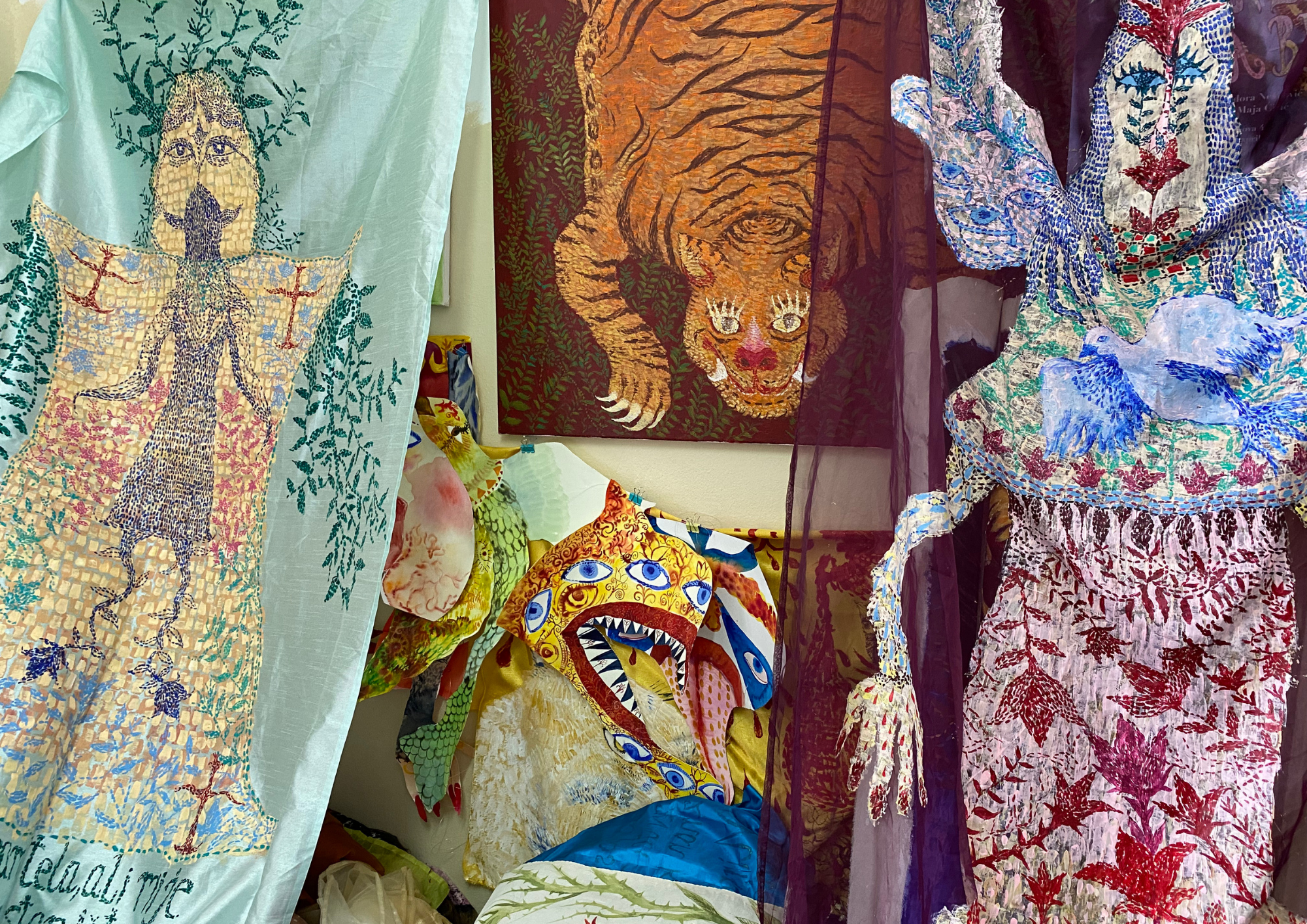
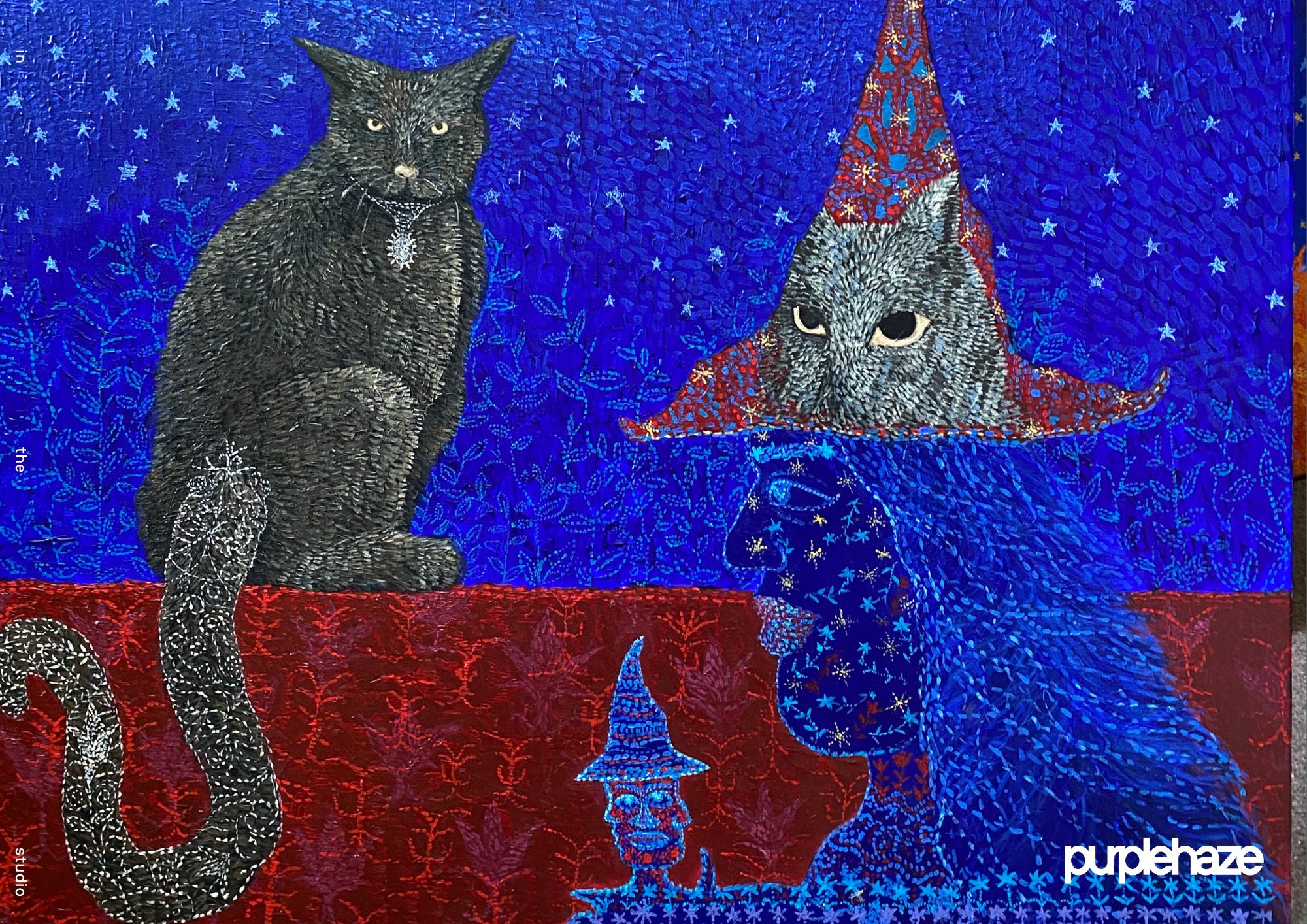
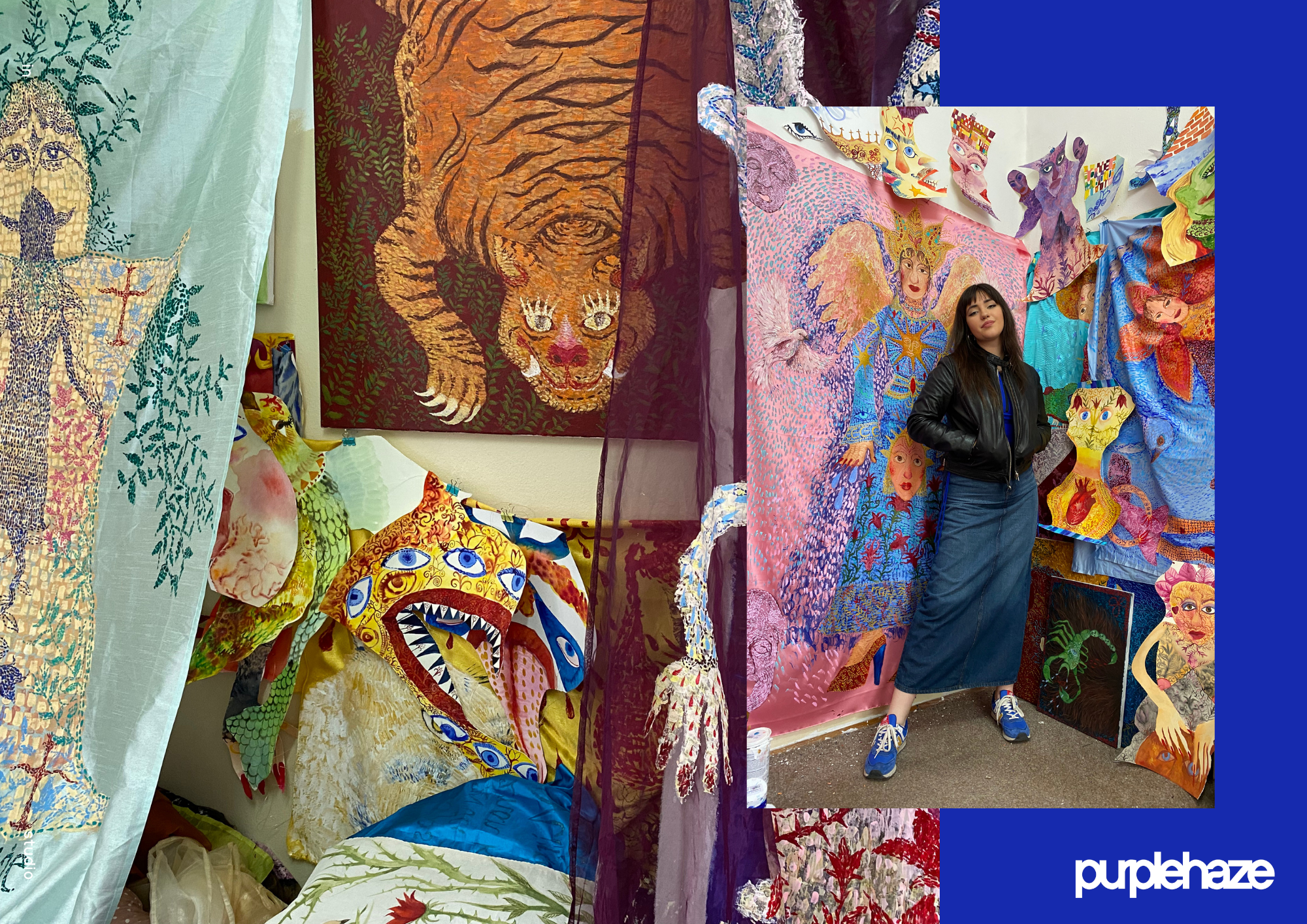
We meet in her studio in the centre of the city. The room is full of surfaces, canvas, paper, sheer fabric, hung, layered, leaning. What is striking, when you get close, is that the marks on the cloth are not stitched. They are painted to look like stitches. Tight, repetitive strokes that imitate the rhythm of a needle without ever picking one up. The work is not about textile as a medium. It is about painting borrowing the memory of another gesture and keeping it as paint.
What follows is a conversation about that question, and about everything it pulls behind it: the body, colour as temperature, the red dress as self portrait, and what an artist actually risks when they decide not to be decorative.
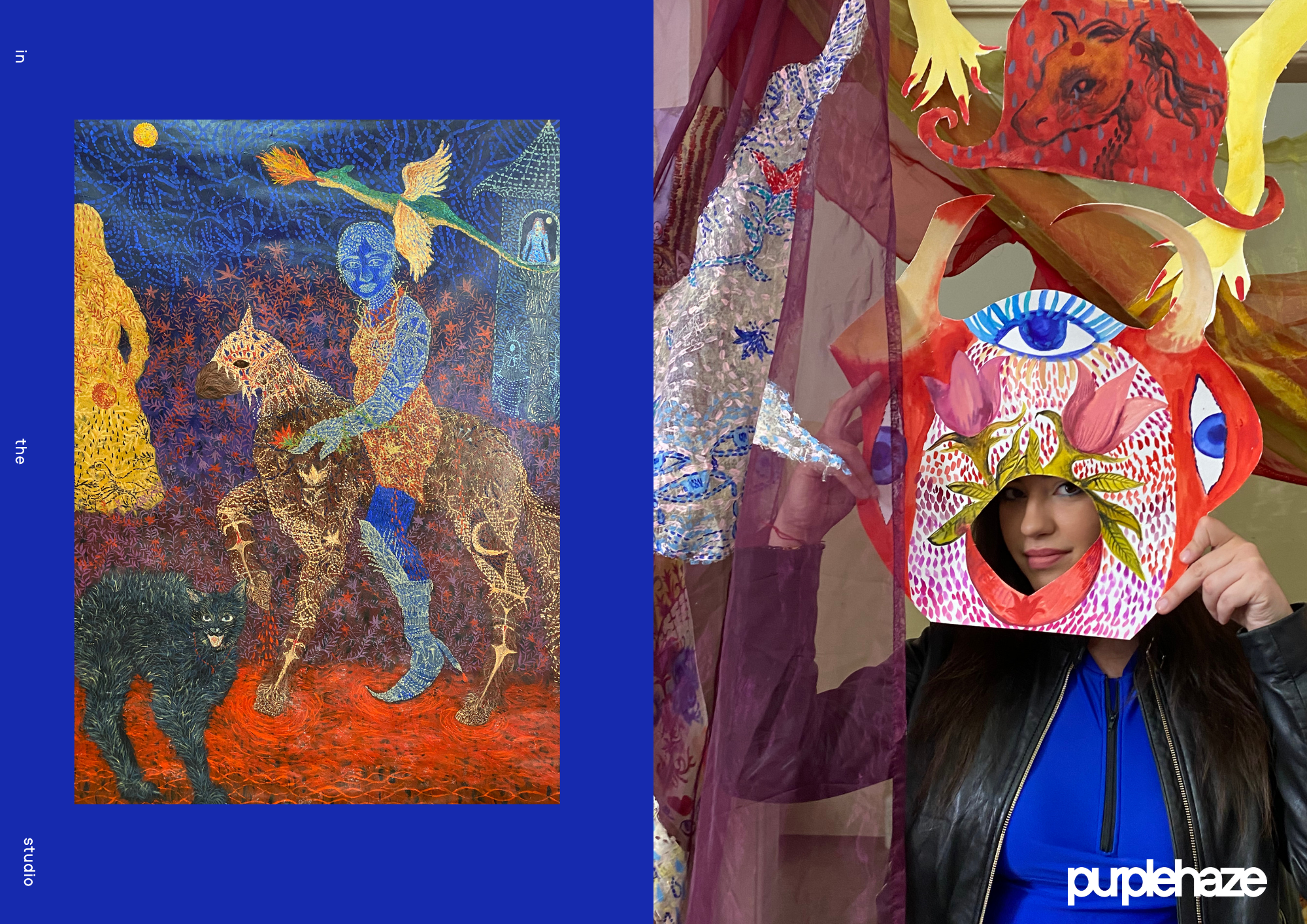
Teodora Nešković
”“As long as we dance, we are alive; and in its essence, dance is life itself.”
Irina Rusinovich: Your work paints the stitch rather than performing it, the brush imitates a gesture borrowed from another tradition, but stays paint. There is a long history of artists like Anni Albers and Rosemarie Trockel who used thread to ask questions painting refused to ask. Do you see your painted stitches in conversation with that history, or is it a different question for you entirely?
Teodora Nešković: I don’t think of that lineage as something I need to belong to, but I am aware that I work within a much wider field that artists like Anni Albers and Rosemarie Trockel helped open a field that was marginalized for a long time. Through working with textile, I feel the need both to reconcile and to break that conflict. The position of the medium today is more fluid than ever, but also harsher, essentially the same, just differently packaged.
We are living in a time where we witness forces that attempt to erase history and everything that once carried meaning. And yet, it gives me a certain hope that textile has found a way to survive and to radiate. As Mikhail Bulgakov wrote, “manuscripts don’t burn.” Today, everything is possible, but everything is also at stake and we all know what passes easily. I always choose honesty.
Teodora Nešković
IR: There is a difference between a work that depicts the body and a work that is itself bodily in its surface, its weight, its making. Which are yours?
TN The philosophy of my work is always corporeal, while its symbolism may or may not point to the body. The figures in my work can represent emotions, people, moments present or past. I am inspired by the philosophy of the novel Dance, Dance, Dance, where dance is not just movement, but a condition of existence a way of surviving in a world that, under the pressure of capitalism, is losing its meaning.
For example, the red dress in my works functions as a kind of self portrait, surrounded by otherworldly figures and fragments of the subconscious woven into the textile. They connect the threads of a world that is slowly unraveling. These figures are in a constant search for meaning and for emotions that have been lost in a reality where we forget that not everything can be bought or sold.
Even though we, as human beings, are constantly searching for “meaning,” we tend to forget something much simpler that we must not stop dancing. Because as long as we dance, we are alive; and in its essence, dance is life itself.
Teodora Nešković
IR: Colour in your work reads less as aesthetic choice and more as temperature — emotional, almost physiological. How consciously do you control that?
TN Colour in my work is me. It represents me, and no matter how much I sometimes try to control it, I ultimately let it be what it is.
IR: When work moves out of the frame and into space, it changes its relationship with the viewer’s body. What does scale or spatial presence allow you to say that a single canvas cannot?
TN: I wouldn’t separate those two, because I believe both can produce the same effect in the viewer. Even a small drawing, if it is honest and deep, can feel like a window into another world, like stepping onto another planet.
IR: Belgrade has produced artists who left and became internationally visible, and artists who stayed and built something specific to this place. Your work feels rooted but not provincial. How do you think about that tension?
TN: I don’t experience it as a tension. I think it’s important to try everything and to push as far as possible. Only through that process, through experiencing and understanding yourself within different contexts can you know where you stand. From an anthropological perspective, it’s also fascinating to observe how a person changes through shifts in environment, and what remains of them in the absence of others.
IR: Your work has been described as made to survive, not to please. What does an artist actually risk when they refuse to be decorative?
TN Whatever you do involves risk. The only thing that matters is to remain true to yourself and your convictions, and to work honestly, people always recognize and feel that.