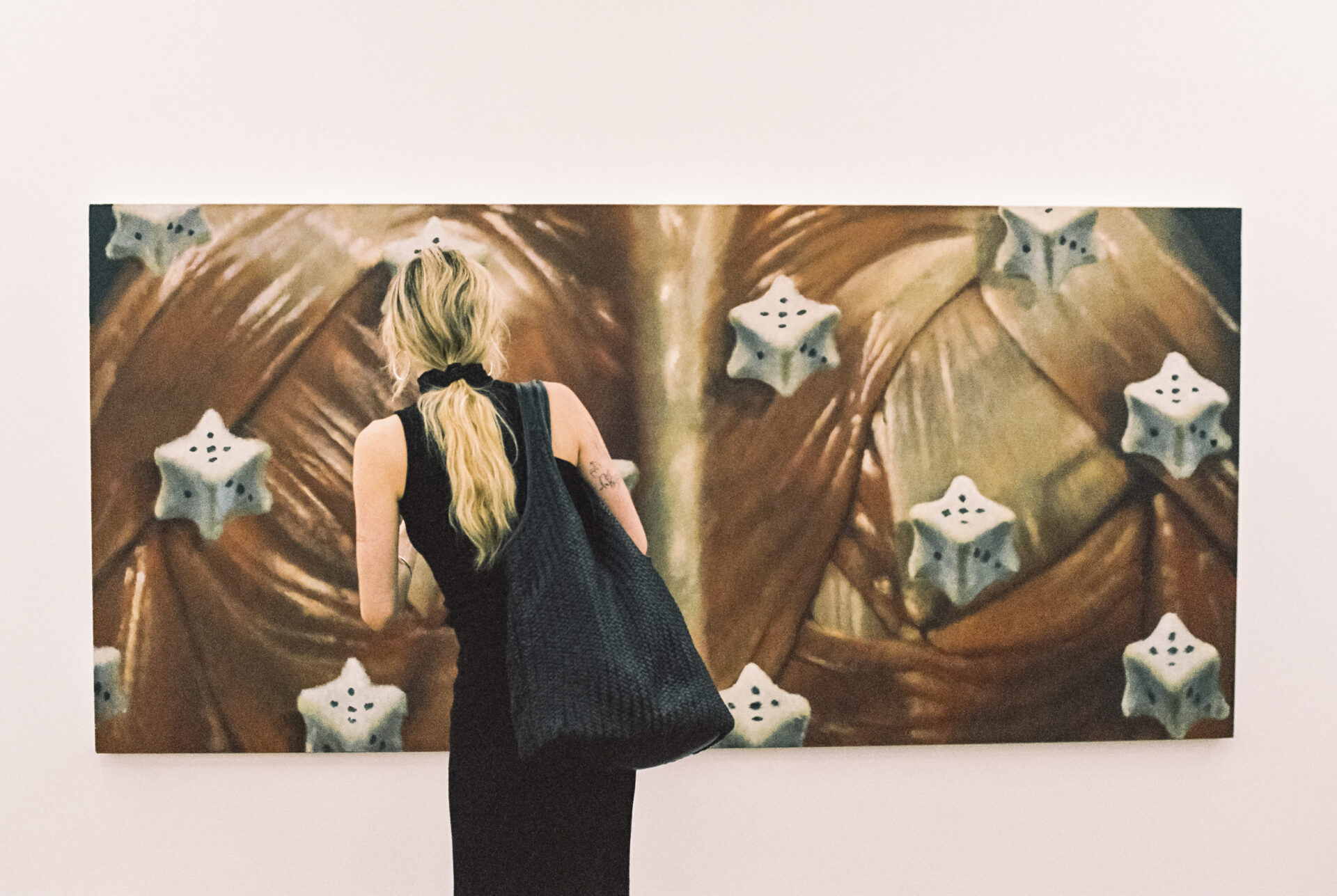
Berlin Art Week 2025 © Ivo Hänisch
words | Editor in Chief Irina Rusinovich
From reconstructed memory and digital bodies to Iranian-American architecture and the increasingly porous territory between art, fashion and performance, PURPLEHAZE selects seven projects to follow during Berlin Art Week 2026.
Every September, Berlin Art Week offers a concentrated view of a city whose contemporary art scene has never been defined by a single centre. This year, as the festival marks its fifteenth anniversary from 9 to 13 September, more than 300 events and over 100 exhibition openings unfold across 125 museums, galleries, collections, project spaces and independent initiatives.
Scale, however, is rarely the most interesting way to approach Berlin. The city’s cultural identity has always depended as much on unexpected spaces, temporary constellations and independent practices as it has on established institutions, and this year’s programme makes that particularly visible. Berlin Art Week’s Featured section continues to draw theatre, film, radio, fashion and performance into conversation with visual art, while projects across the city examine memory, migration, technology, identity and the ways images acquire meaning through the spaces in which we encounter them.
Rather than attempting to cover everything, PURPLEHAZE has selected seven projects that reflect the questions we are most interested in right now.
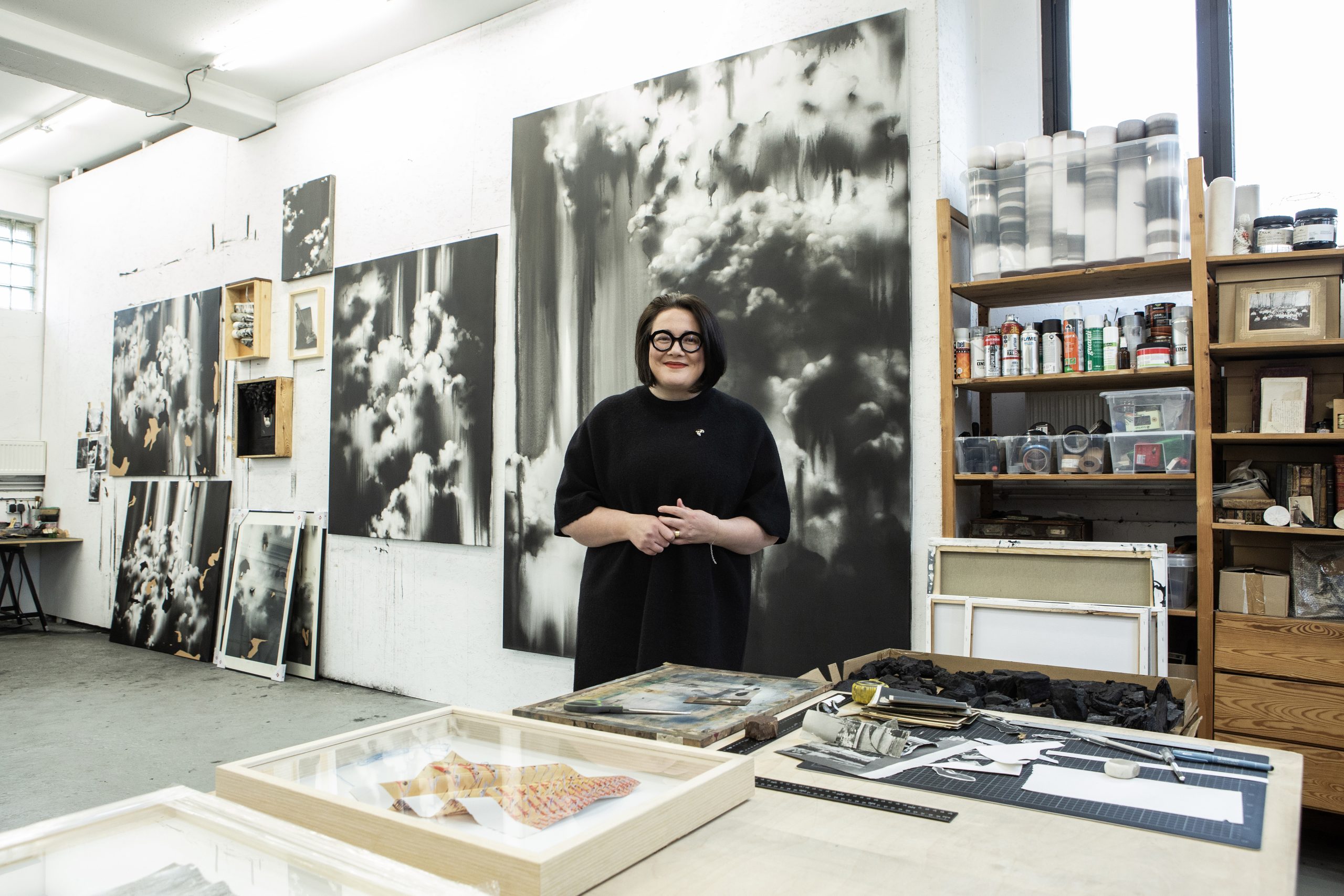
Lucia Tallová: Moving Clouds courtesy Deutsche Bank Palais Populaire
Lucia Tallová: Moving Clouds Palais Populaire
Memory is unreliable material, and Lucia Tallová has built much of her practice around precisely that instability. Named Deutsche Bank’s Artist of the Year 2026, the Bratislava-born artist works between painting, collage and installation, combining photographs found in old books and magazines with furniture fragments, natural materials and other objects carrying traces of previous lives.
In Moving Clouds, these fragments become less an archive of what happened than a reconstruction of what might remain. Tallová’s interest in loss, ecology, modernity and suppressed female histories feels particularly relevant in a culture where images are produced and discarded at extraordinary speed. Her work proposes something slower: an image can survive its original purpose, lose its context and still become the beginning of another story.
The exhibition opens at PalaisPopulaire on 9 September, placing Tallová’s meditation on the fragility of memory at the centre of Berlin Art Week’s first evening.
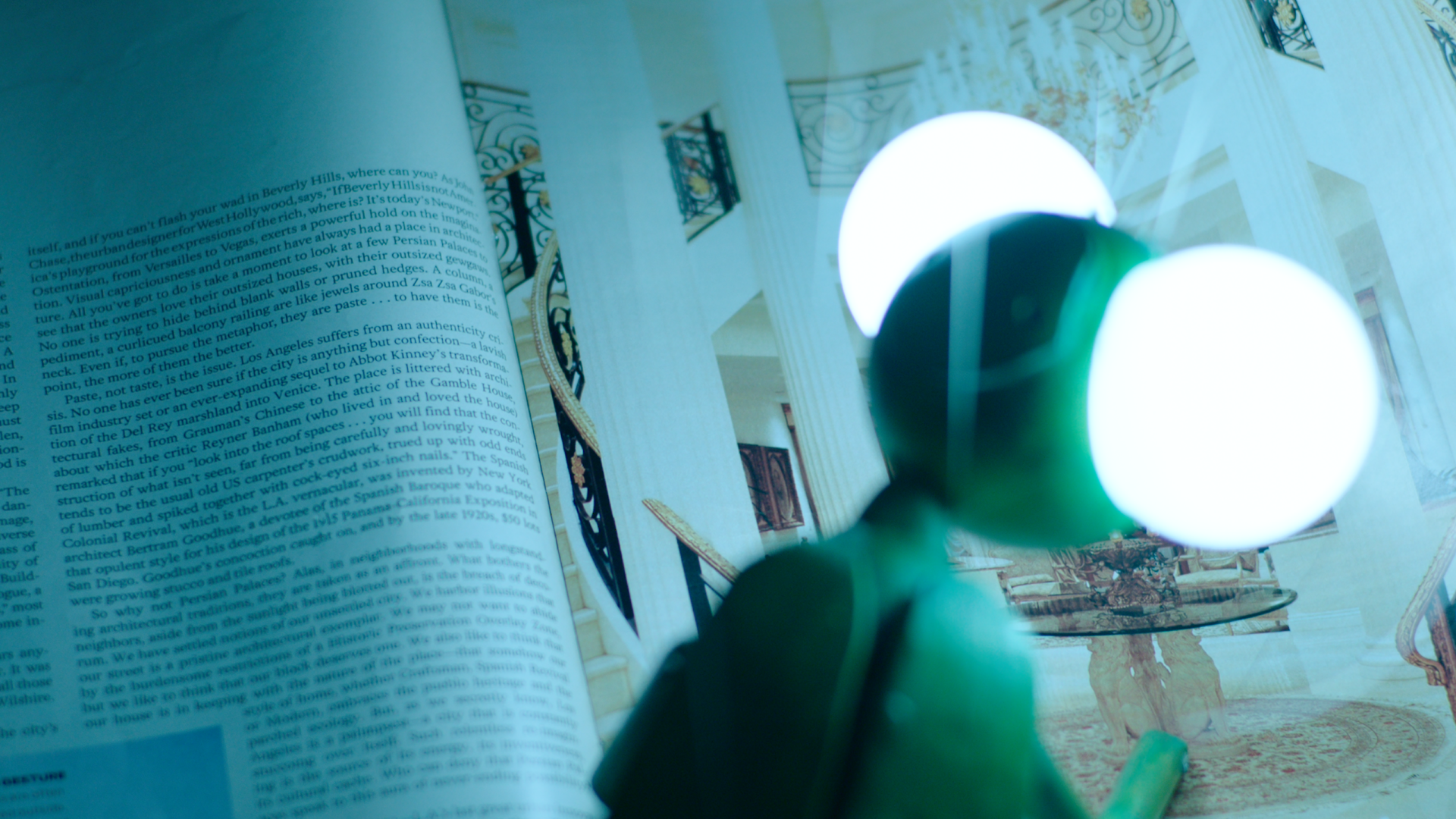
Berlin Art Week 2026, Fluentum, Arash Nassiri, A Bugs Life, 2025. Co-commissioned by Chisenhale Gallery, London; Fluentum, Berlin; and Fondation Pernod Ricard, Paris. Produced by Chisenhale Gallery. Courtesy of the artist.
Arash Nassiri: A Bug’s Life, Fluentum
Architecture can preserve histories that official narratives leave behind. In Arash Nassiri’s A Bug’s Life, an opulent Beverly Hills mansion becomes the setting for a surreal journey through Iranian-American aspiration, displacement and cultural memory. The building belongs to a distinctive architectural micro-movement associated with immigrants arriving in the United States around the time of the 1979 Iranian Revolution, a style that was later banned.
Nassiri introduces a wooden insect puppet into this environment, allowing an apparently absurd protagonist to move through interiors charged with questions of belonging and erasure. The collision between theatrical construction, architecture and moving image gives the work an atmosphere that sits somewhere between domestic fantasy and historical archaeology.
Presented by Fluentum and co-commissioned with Chisenhale Gallery in London and Fondation Pernod Ricard in Paris, the project is Nassiri’s first institutional solo exhibition in Germany. Its Berlin presentation is accompanied by new works and a forthcoming publication extending the project through archival material and visual research
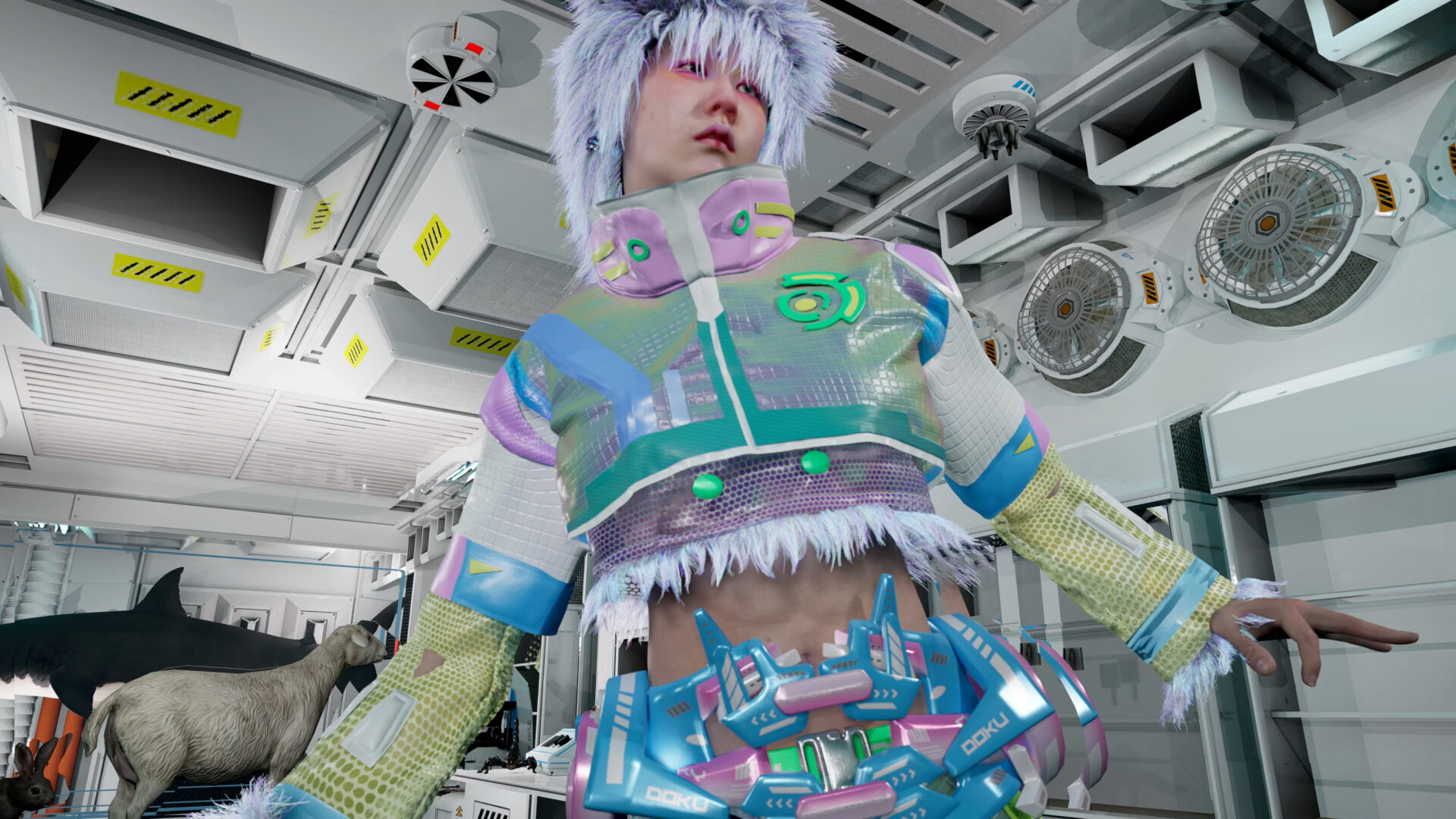
Berlin Art Week 2026, Kunst im Westend, Lu Yang, DOKU the Self, 2022. Courtesy of the artist and Société
Lu Yang: Doku: Triage Kunst im Westend, DRK Kliniken Berlin Westend
Lu Yang has spent years dismantling the apparent boundaries between physical and digital existence. Working across 3D animation, immersive installation and digital technology, the artist uses the avatar DOKU to explore consciousness, identity, spirituality, science and the unstable definition of the human body.
For Berlin Art Week, those questions enter an unusually charged environment. Doku: Triage is installed inside the historic Kochhaus at DRK Kliniken Berlin Westend, where decommissioned hospital beds become individual viewing stations. Visitors lie down, put on headphones and encounter imagery from Doku The Self and Doku The Flow through screens positioned above them. Privacy filters make the images visible only from the bed itself.
The installation changes the meaning of both screen and body. Digital existence is no longer encountered through the casual intimacy of a phone or laptop but from a position associated with vulnerability, illness and mortality. Lu Yang’s virtual body meets the viewer’s physical one in a place where the fragility of that physical body is impossible to ignore.
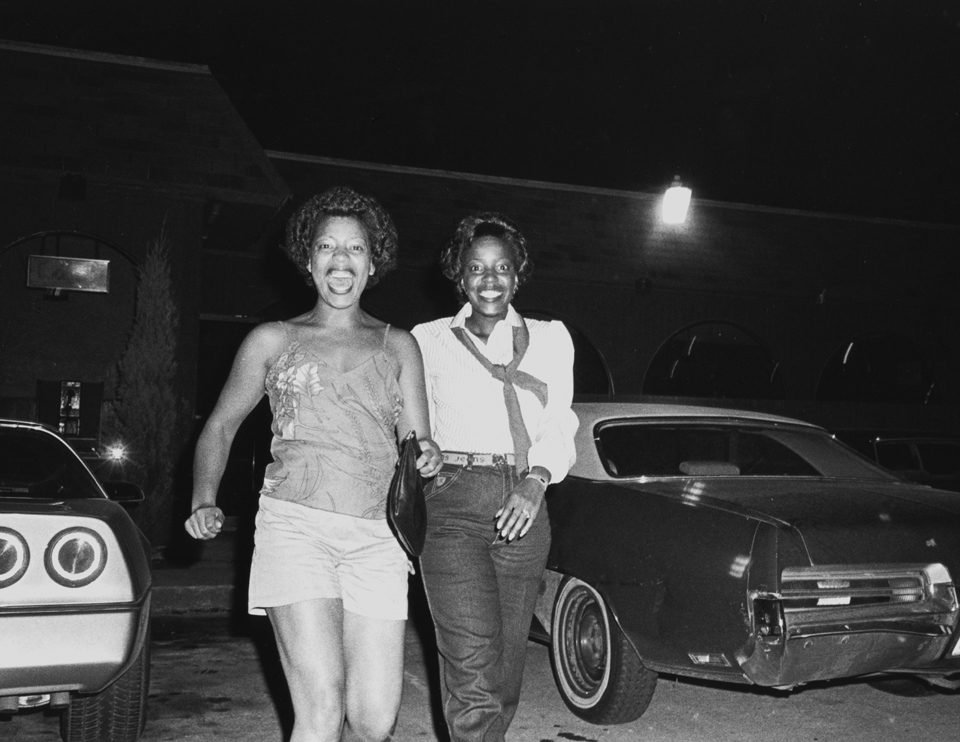
Berlin Art Week 2026, C/O Berlin, Carrie Mae Weems;Welcome Home, 1978-84. Courtesy the artist and Gladstone Gallery New York, Frankel Gallery San Francisco
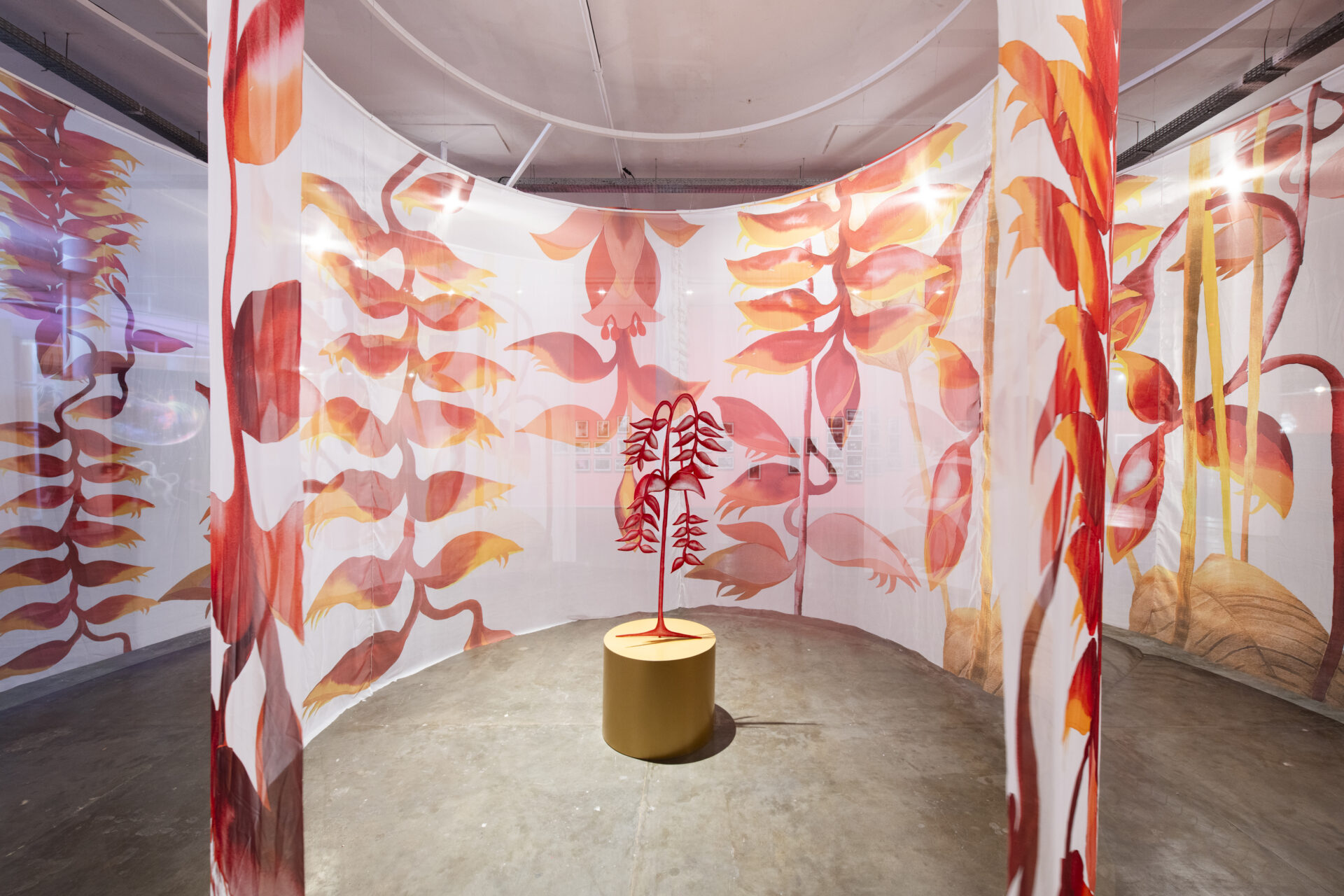
Berlin Art Week 2026, Haus der Kulturen der Welt (HKW), Maria Magdalena Campos-Pons, Macuto. Ausstellungsansicht 36. Biennale von São Paulo, © Levi Fanan / Fundação Bienal de São Paulo
The 36th Bienal de São Paulo Comes to Berlin | Haus der Kulturen der Welt
Moving a biennial from one city to another raises a question more complicated than simply which artworks travel with it: can an exhibition retain its meaning when its geography changes?
For Berlin Art Week, Haus der Kulturen der Welt presents a Berlin iteration of the 36th Bienal de São Paulo. The relationship between the two sites is unusually compelling. The São Paulo Biennial occupies Oscar Niemeyer’s modernist pavilion in Ibirapuera Park, while HKW sits within Berlin’s Tiergarten in another building whose architecture resists the conventions of the white cube. Curator Alya Sebti has described the architecture and surrounding landscape as integral to the curatorial process rather than neutral containers for it.
That approach shifts attention from the familiar spectacle of the international biennial towards something more fundamental: how art changes when it encounters another architecture, another landscape and another audience. With participating practices including Wolfgang Tillmans, the Berlin iteration offers an opportunity to consider the exhibition itself as a medium rather than simply a collection of works transported from one institution to another.
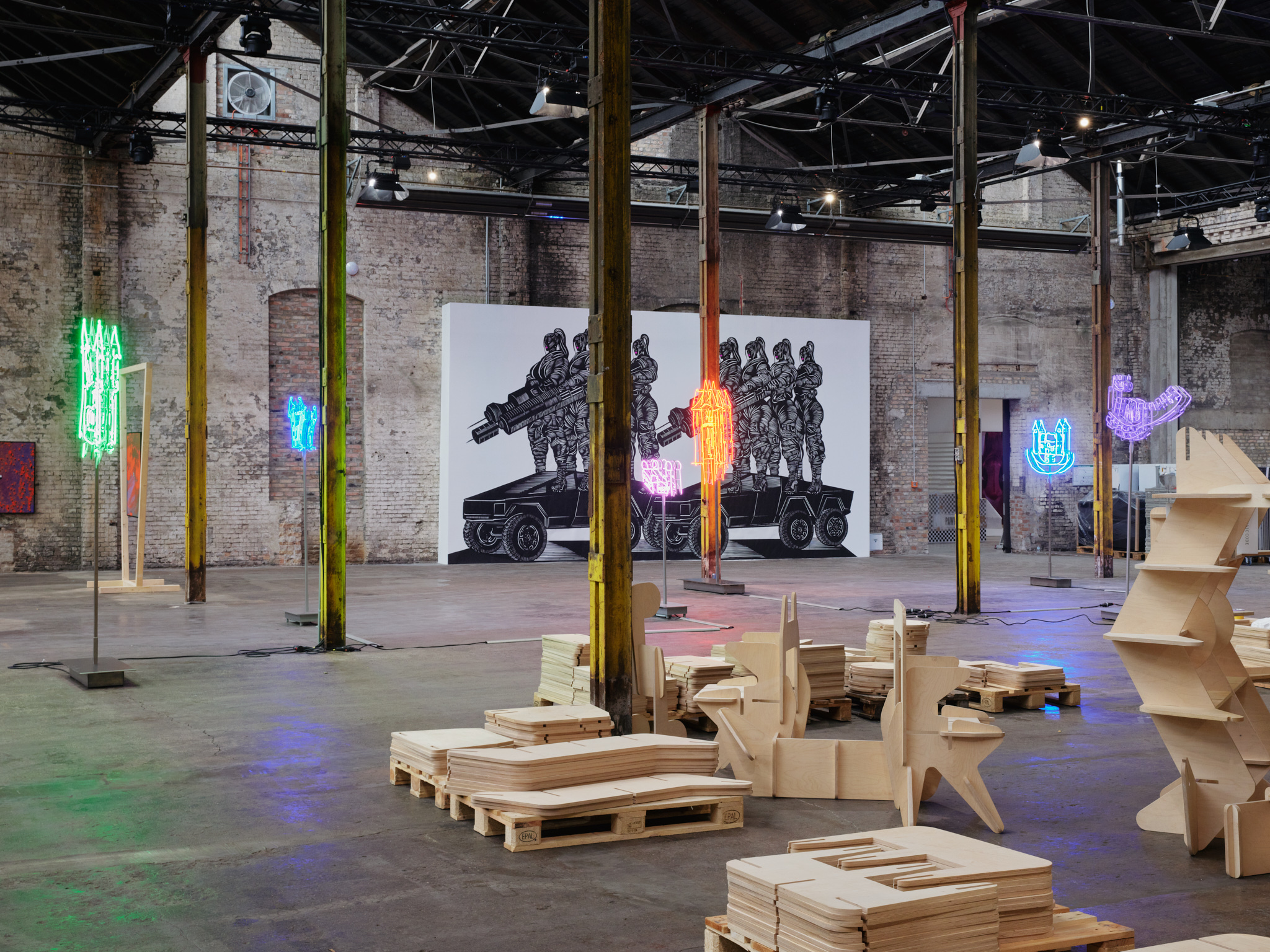
Hallen 07 Photo J.Clark
Hallen 07 Wilhelm Hallen
Berlin has always been particularly good at making architecture part of the experience of looking at art, and Hallen 07 takes that tendency to industrial scale. Across 9,000 square metres of the former Wilhelm Hallen in Reinickendorf, more than fifty national and international artists are brought together through presentations by Berlin galleries, museums and private collections. Participants include Esther Schipper, ChertLüdde, Nagel Draxler, Berlinische Galerie, Schirn Kunsthalle Frankfurt, Office Impart and the Mercedes-Benz Art Collection.
The attraction here lies less in a single curatorial thesis than in the density of encounters created by the setting. Commercial galleries, institutional collections and artistic interventions temporarily occupy the same architecture, while performances, readings, drawing, music and participatory projects extend the programme beyond a conventional group exhibition.
At a moment when cultural categories are increasingly overlapping, Hallen 07 functions almost as a temporary ecosystem for Berlin’s art scene, making the relationships between artists, galleries, institutions, collections and audiences unusually visible.
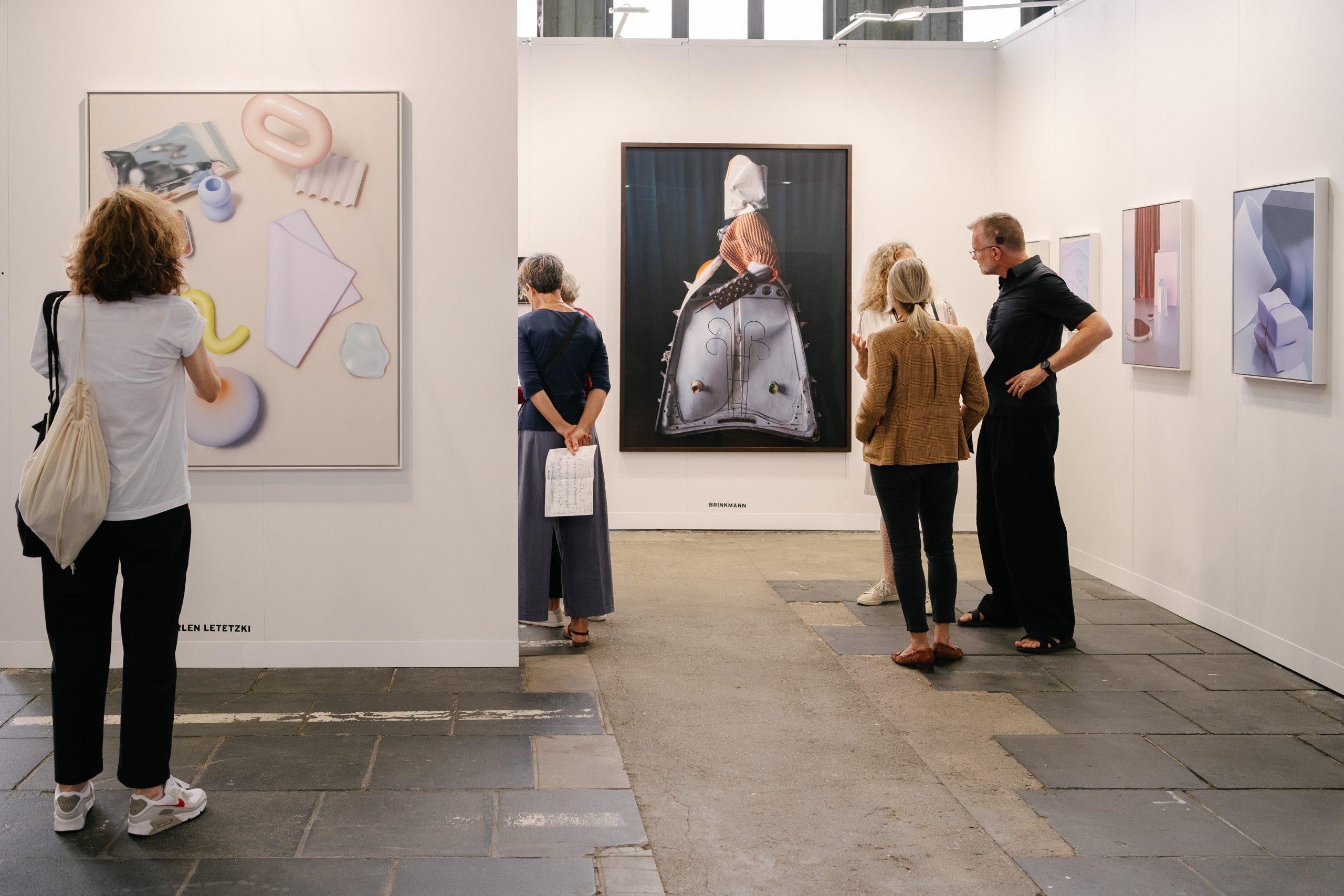
Positions Berlin Art Fair 2025 © Dominik Friess
Positions Berlin Art Fair | Tempelhof Airport
Art fairs are often approached as commercial barometers, but their more interesting function is the way they compress geographically dispersed scenes into a single temporary field of view. From 10 to 13 September, Positions Berlin Art Fair brings more than ninety galleries from around twenty countries into Hangars 5 and 6 of the former Tempelhof Airport, making it the only art fair officially within Berlin Art Week.
Its international range is particularly useful for discovering practices that might otherwise sit outside the usual Berlin circuit, with galleries arriving from Seoul, Taipei, Istanbul, Prague, Tokyo, Madrid, Riga, Bucharest and elsewhere alongside German participants. The fair also places Turkey in particular focus this year, reflecting on the country’s longstanding cultural relationship with Germany and its position between artistic contexts in Europe and Asia.
For PURPLEHAZE, Positions is worth approaching less as a fair to be “covered” than as a place to look for what comes next: artists whose work deserves a second encounter after the week itself has ended.
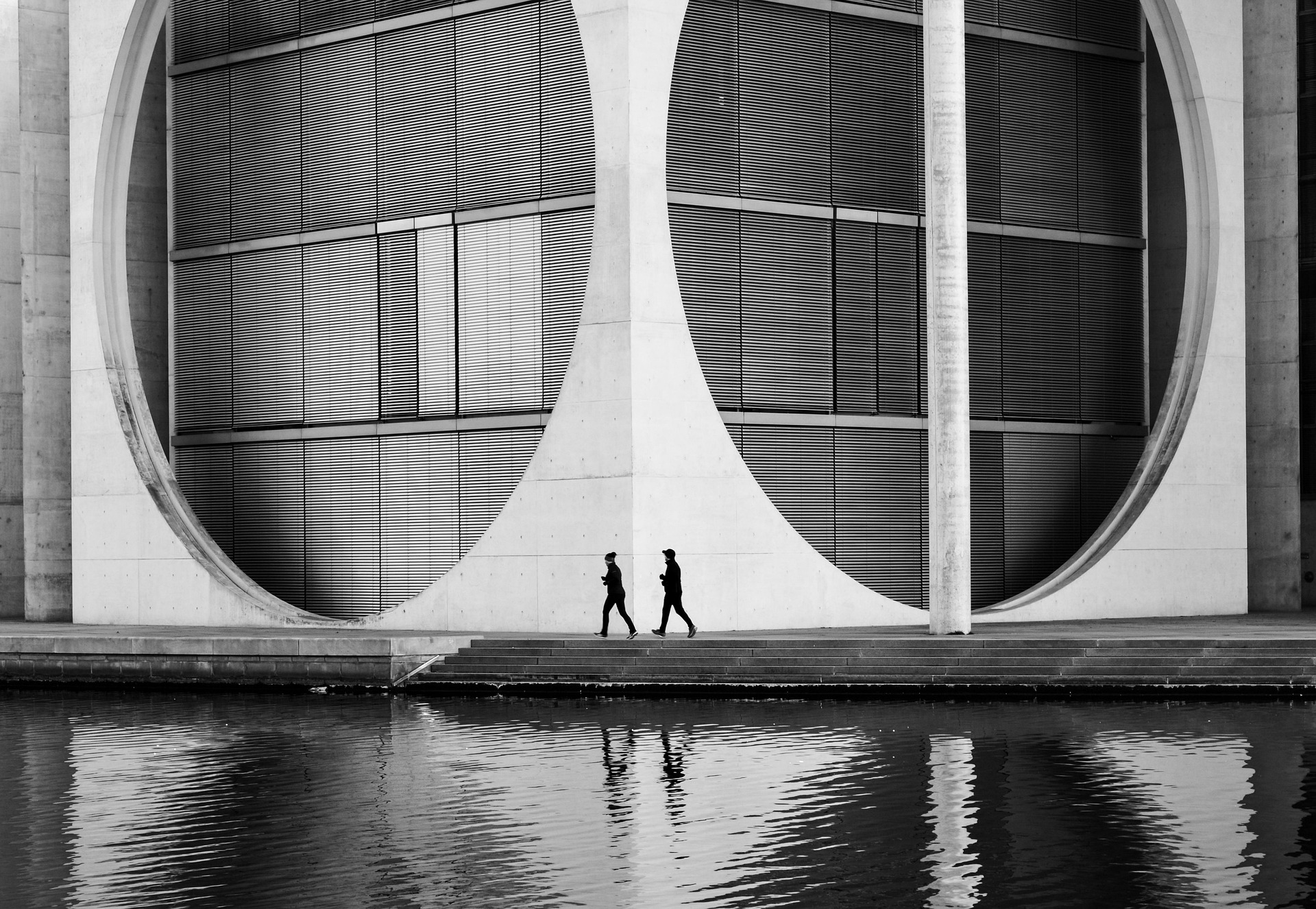
Berlin © wal_172619
Berlin, for five days
What makes Berlin Art Week useful is not the possibility of seeing everything, which would require an unfortunate combination of teleportation and professional stamina, but the chance to observe how differently contemporary art now chooses to appear.
Across this year’s programme, an exhibition can inhabit a hospital bed, an industrial hall, an archive, a fashion presentation or an architectural history carried from Beverly Hills to Berlin. The recurring question is no longer simply what is being shown, but how the conditions around an artwork change the way it is understood.
For a city whose cultural identity has long depended on movement between institutions and independent spaces, established names and emerging practices, that instability feels appropriate. Berlin Art Week remains most interesting when it is treated not as a checklist of exhibitions to complete, but as a temporary map of where the city’s visual culture is moving next.
Berlin Art Week runs from 9–13 September 2026 across Berlin.