Category

/NEWS/

Exploring the Beauty of Nature | An interview with a Korean Artist Shin Chaeyeon

By /ART/, /NEWS/

Text by Irina Rusinovich

An interview with a Korean Artist Shin Chaeyeon

What draws you to nature as a source of inspiration for your art?

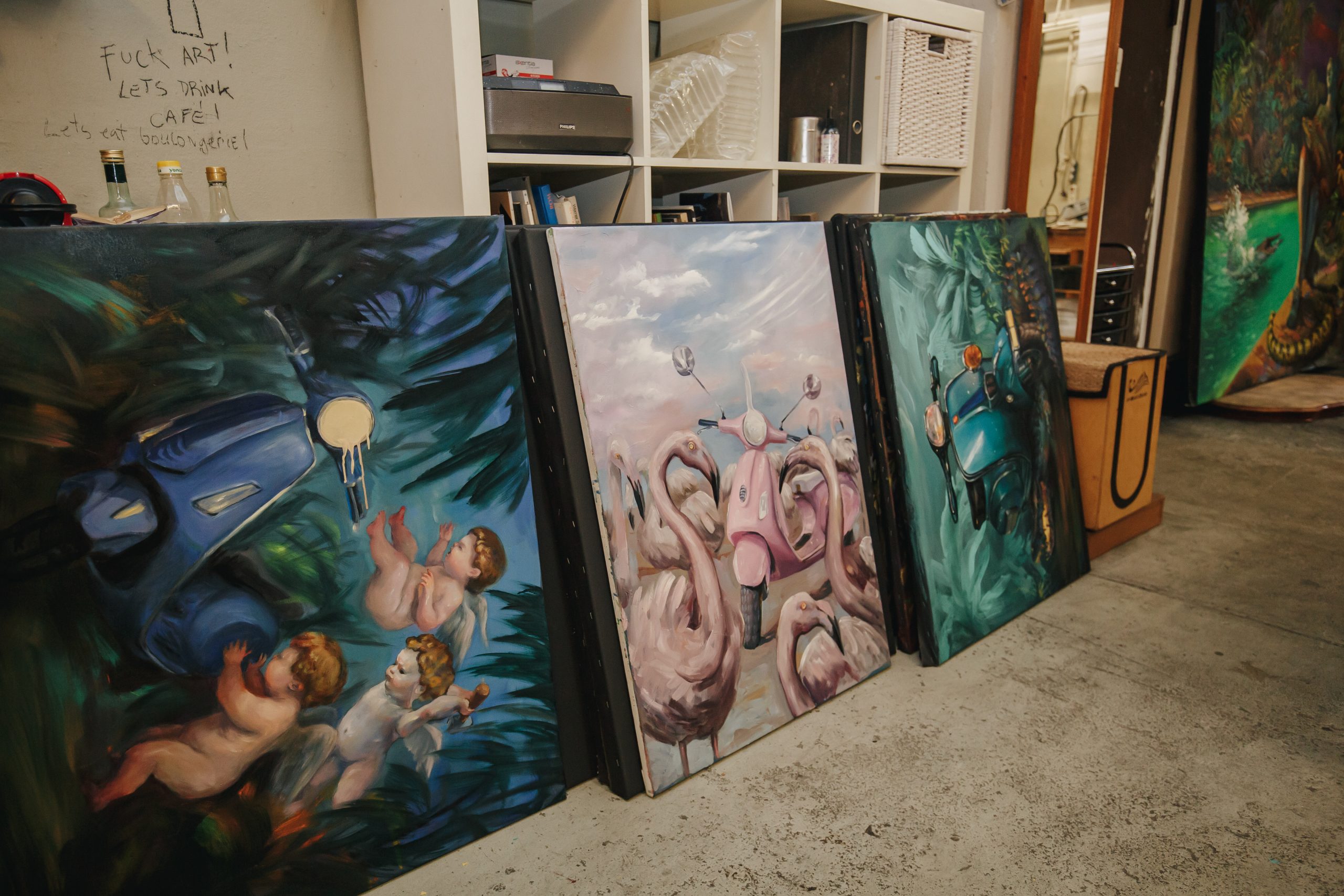
I feel at ease and relax in nature. Just a small park or wildflowers in the city create some space in my spirit and mind.  I feel they are whispering and singing in living form. Nature is young and wild at the same time very ancient and wise. When I connect to them, I can listen to their old voice invoking my voice which is always been part of the great nature.

Can you describe your creative process from the initial idea to a completed artwork?

I make color and texture on the surface by abstracting from plants or natural pigment. And it leads to some poetry images or subjects in an intuitive way. A huge part of the whole process is a work of alchemy, it goes very much to unexpected and wonderful outcomes. Sometimes I feel I am only a translator of what nature wants to say or sing. When I choose them to compose in specific series, I choose to be more delicate or more intuitive and wild.

How has your Korean heritage influenced the themes and style of your artwork?

I think I’ve been influenced not only by Korea but also by various countries through literature, paintings, sculptures, music, and travel.  I tried to find themes and style which feel right and suited me so that I can feel satisfied and happy when I do my work. I could also say It’s quite personal.

When it comes to Korean heritage, I remember my dad, who had always supported and cared for me, and that time made the core of my artwork and myself, which is unconditional love.

https://www.shinchaeyeon.com/

Do you have a favorite natural element or landscape that you like to depict in your artwork?

I like earth and fire element. I love sunshine and love to swim in water too. I like my Light series and Air series as well. The landscape of Horizon with Mountains, lakes, and deserts is compelling to me. I see the landscape as a big textured canvas or frame, and I fill them with imagination, contemplation, and color. It’s more that I’m trying to express what I see and How I feel their spirit inward than depicting the look of the outside.

When I choose elements for each work, sometimes I follow my mood and feeling of the day that I need to connect with or elements within me.

How do you balance realism and abstraction in your depictions of nature?

I depict nature as energy and spirit form. Spirit of flowers, wind, rain, and stones. Abstraction gives images of poetry, and small realism which looks like a horizon could make it balanced and peaceful. I like it that way. I’d like to let my color and texture speak for themselves as nature does. And sometimes like clouds, people find some figure in my art with their mind and I like it too.

What message or emotion do you hope to convey through your art inspired by nature?

Nature is home. They are here, they’ve always been here to listen quietly and want to connect to our old souls. I hope the person who sees my art finds some relaxation and playfulness in beauty, as nature does.

How do you see your artwork evolving in the future, and what plans do you have in store for your next project?

Recently I’ve been exploring other mediums like soft pastel, cyanotype, linocut, and monotype printmaking. Playing with other mediums gives me fresh air and new joy. Also during the art residency I had in Portugal and Spain last few months, I could explore local plants in my process. And I liked it. Wool felting and paper making for the surface also quite feel interesting and experimental to me for now

Saskia Schäfer | Iridescent Divinity

By /FASHION/, /NEWS/

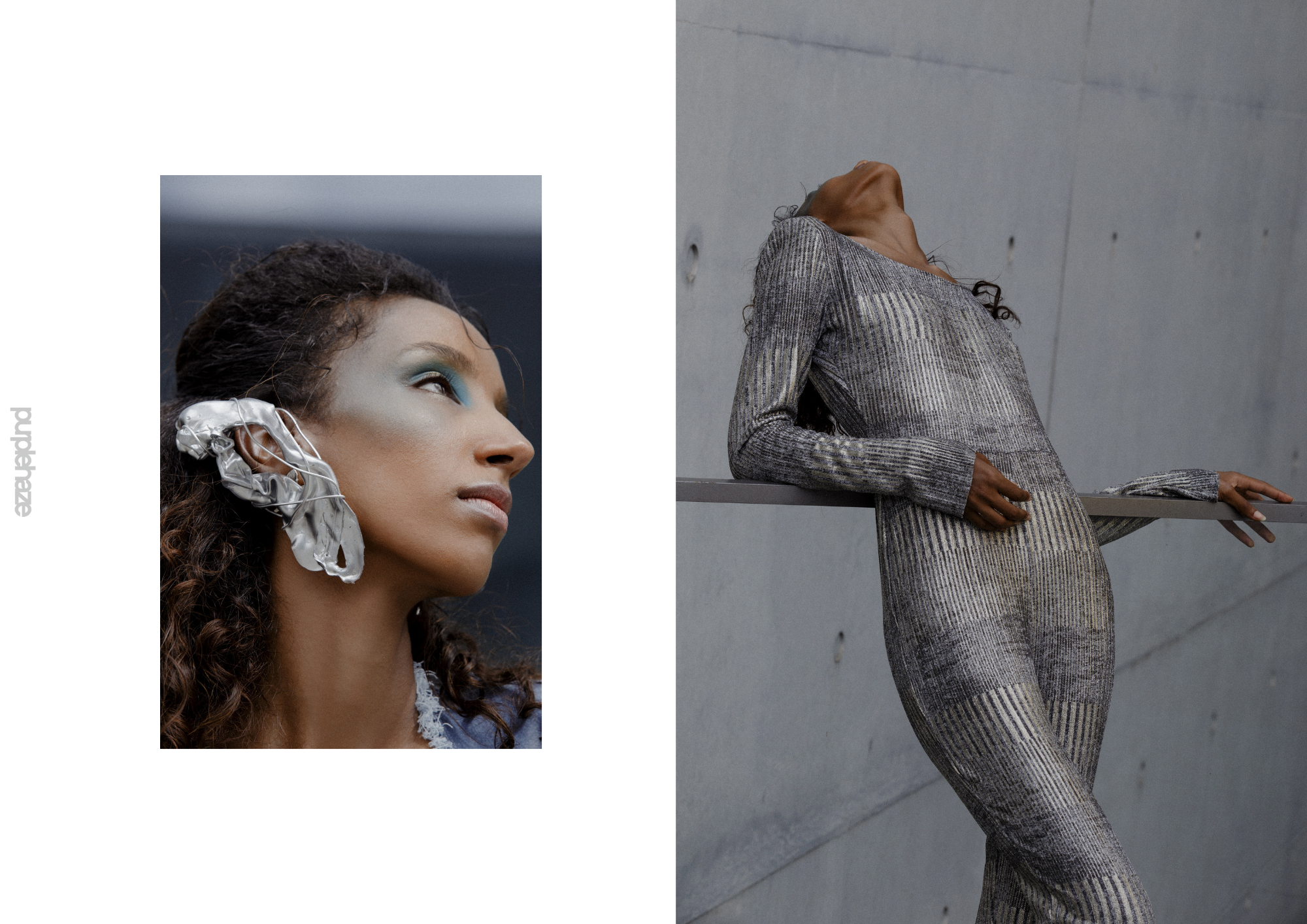
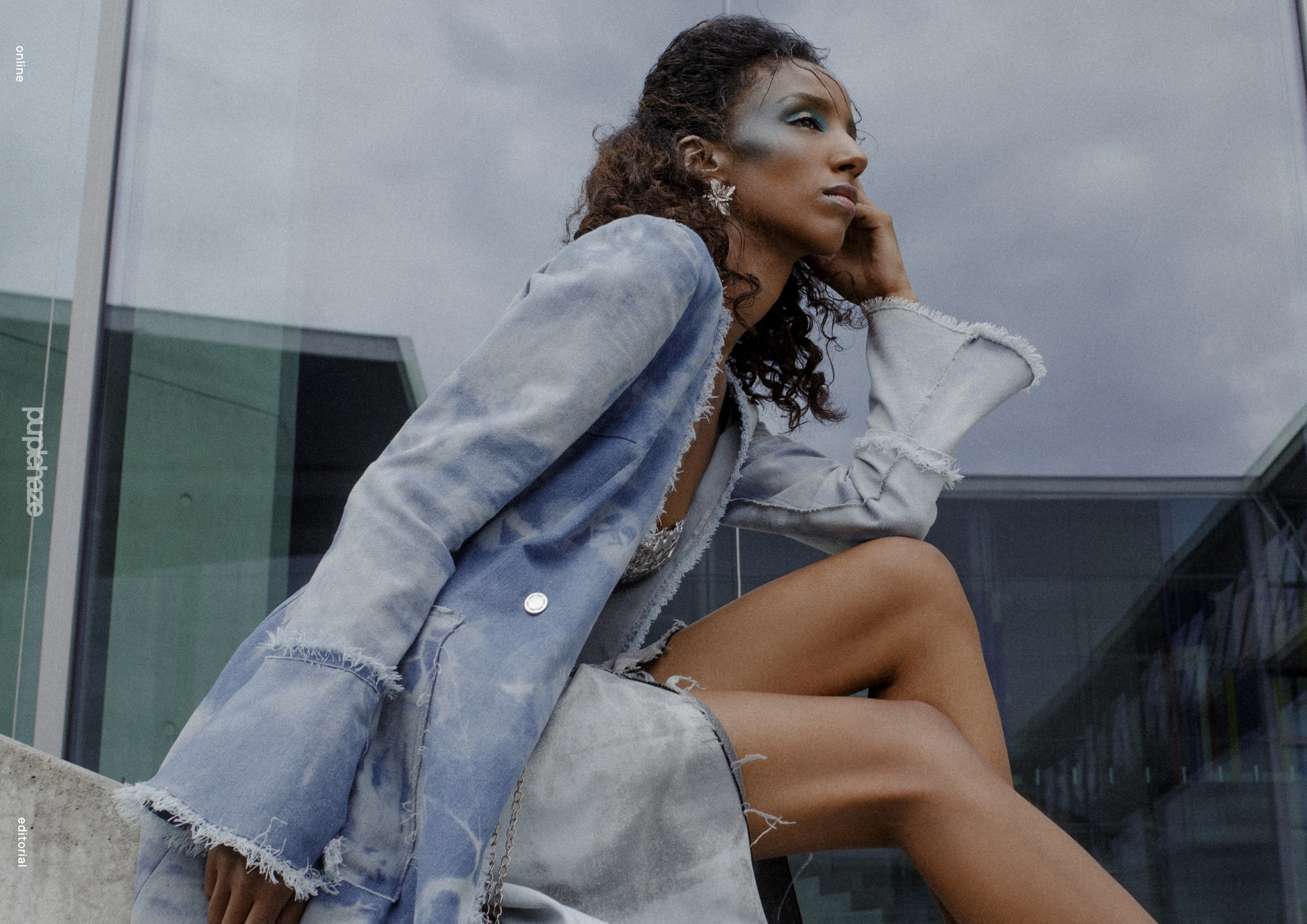
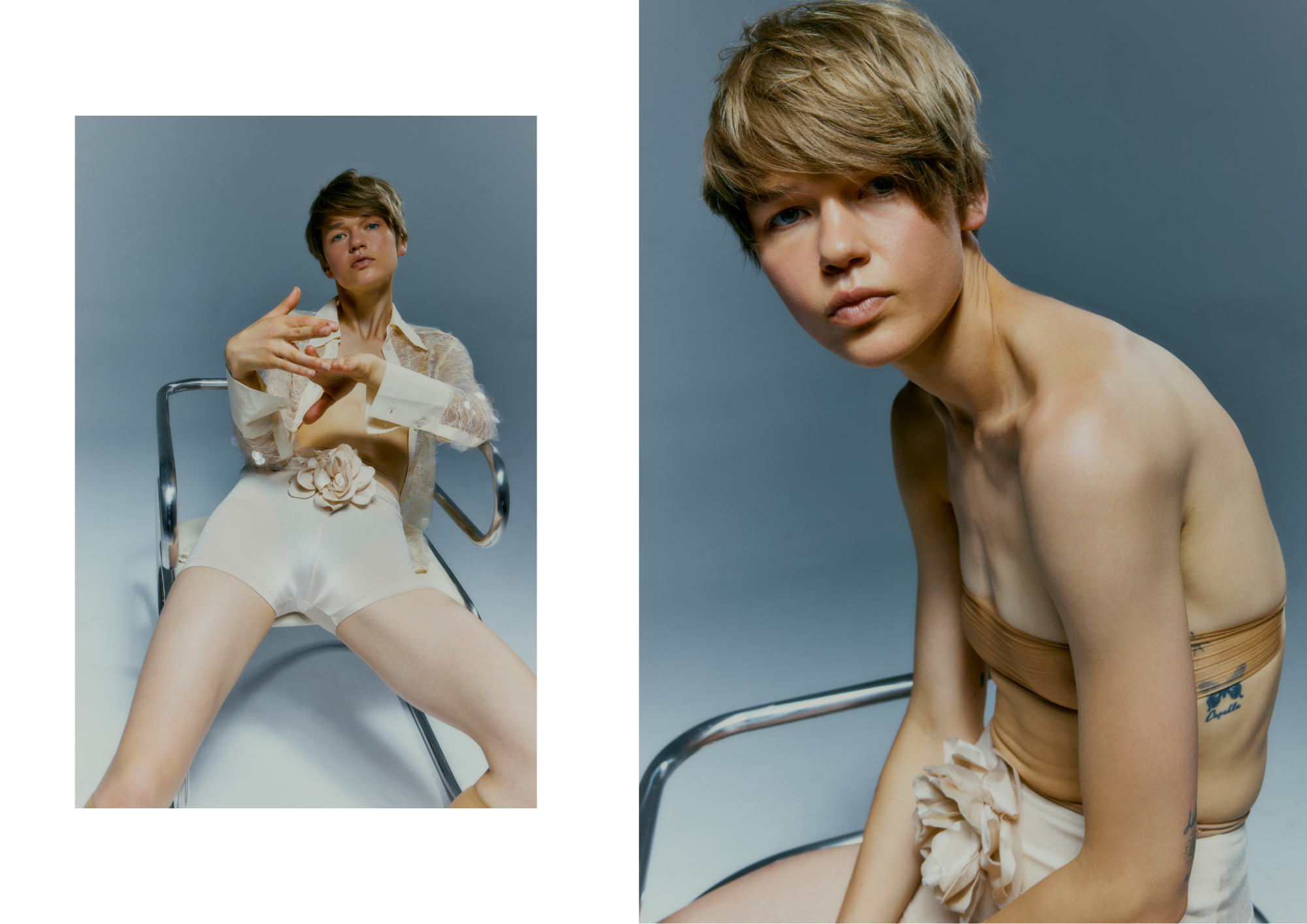
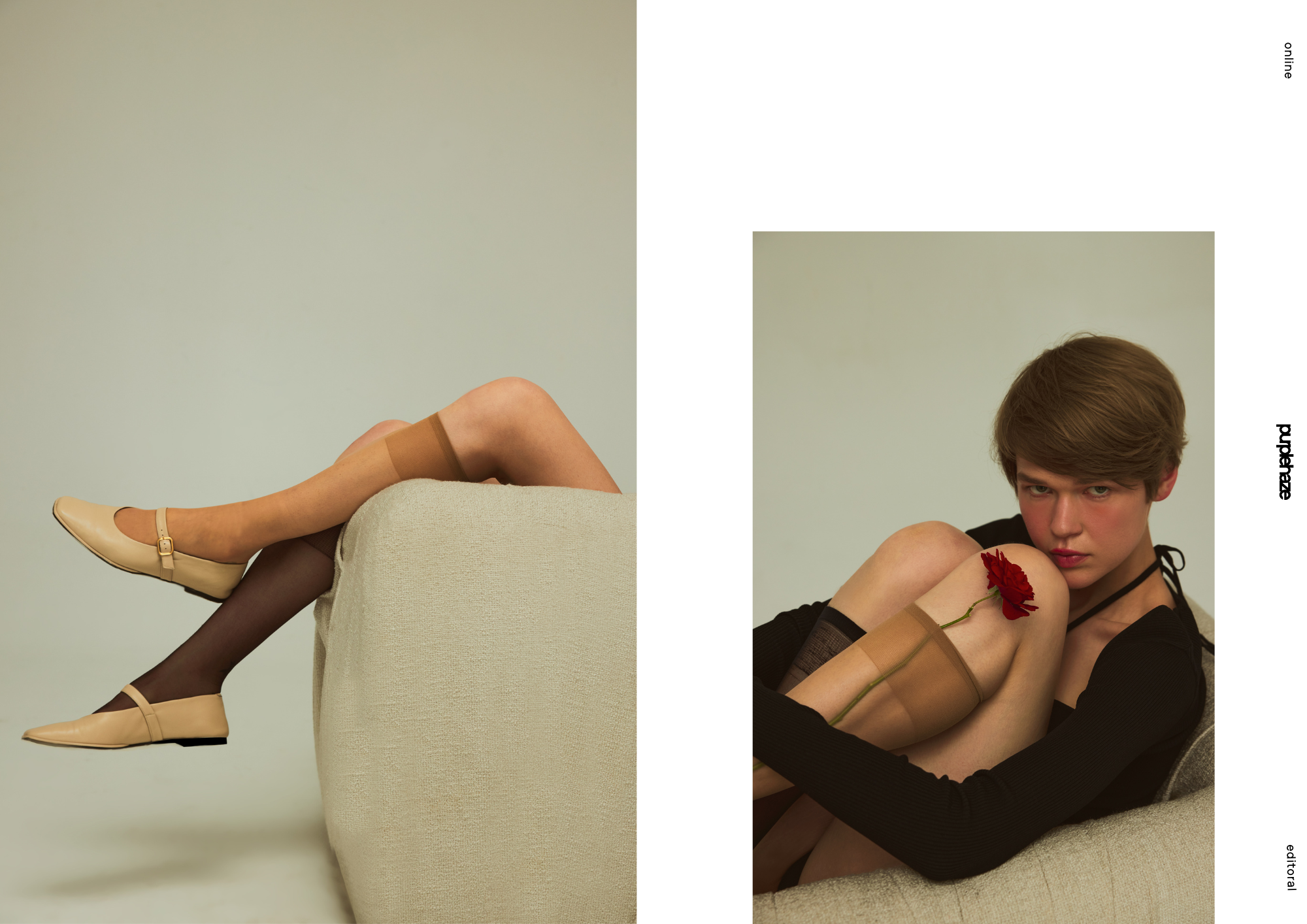
IRIDESCENT DIVINITY

Photographer Saskia Schäfer @saskaya.photography
Assistants Pelan Alkas and Charlotte Feldkamp  @pelan.alkas @charlottefdk
Stylist Sejne Dvorkina @sof_dvorrkina
Make up artist & Hair Larissa van Riesen @larissa.hmua
Model Magatte Diop / Modelwerk  @magattediop_
Set Design Freddie Brehm   @areyoureadyfreddie_

 Total look @merrfer_the brand

 Total look @merrfer_the brand

 Total look @merrfer_the brand

 Total look @merrfer_the brand

 Total look @merrfer_the brand

 Total look @merrfer_the brand

Unleashing the Abstract Beauty of Botanics | A Q & A with Tina Mona Cohen

By /ART/, /INTERVIEW, /NEWS/

Text by Irina Rusinovich 

Unleashing the Abstract Beauty of Botanics | A Q & A with Tina Mona Cohen

Born in 1988 in the south of France, Tina Mona is a self-taught French artist living for 6 years in Germany where she has her atelier. Always deeply attracted and connected to the cultural world, she first managed artistic and cultural projects before she decided to trust her creative talent and fully live her artistic vocation.  Her work is deeply inspired by nature but also a meditative way to express herself. 

Always experimenting with different techniques, she mixes media such as acrylic, oil painting, gold leaves, and resin, allowing her to play with the light and give her artwork a sense of vibrancy and life. 

After a solo exhibition in Paris in 2022, Tina Mona is participating 2023 in multiple group exhibitions in Germany. Her works will be also shown at the collective Art Exhibition “ WILD SOULS“ starting 22.06. We decided to ask Tina a few questions about her background and arts!

What inspired you to incorporate botanical themes into your abstract artwork in the first place?

Nature is both all around us and deep within us, we are inseparable from it. However, too often we forget our connection to our own inner nature and get drowned by the troubles of the world. After experiencing a deep trauma, art helped me to rebuild myself and painting became a mediative way to learn how to be true to my real nature.
I want my art to remind every viewer that we should respect the nature all around us but also the nature within us and raise awareness about mental Health.

How do you approach incorporating organic elements such as leaves, flowers, and other materials into your pieces?

I find a lot of inspiration in nature. During long walks in the forest, I try to practice mindfulness and to be aware of the nature around me and that´s when I really absorbed a lot of inspiration. I am often inspired by the colors of unusual elements like the inside of a stone, a broken branch, the moss on the trees, the movements of the leaves, and the reflection of the sun… Nature brings me a lot of joy and comfort and intuitively it finds its way into my painting.

Do you have any particular botanical motifs or themes that frequently appear in your abstract works?

Through my painting, I invite the viewer to a peaceful walk in the forest where he could contemplate the vegetation above him, and feel nature in movement and the reflection of the light in it.

© Tina Mona Cohen 

How do you balance the organic forms of botanical elements with the more abstract forms that characterize much of your work?

I apply multiple layers of paint, notably light shades of white, which manage to maintain a lightness, a weightlessness in my representations of shapes and colors that end up being quite buoyant. I often mix media in my painting using acrylic, and oil paint but also gold leaves and epoxy. This gives me the possibility to play with the light and give the artwork a sense of vibrancy and life.


Can you describe your process for developing the color palettes used in your work, especially those inspired by flora and fauna?

When I am painting, I enter a meditative state, I will not have a predefined pattern, but I am simply focusing on the colors. Rather than trying to make shapes, I focus on a small number of colors that I want to use, then just place dots onto the canvas with my paintbrush before using the brush to swirl these dots into one another, letting totally my intuition guide my painting. Often, I use different shades of blue colors as a reference to my Mediterranean roots.

© Tina Mona Cohen 

Have you noticed any changes in how viewers interpret your work when botanical themes are present as opposed to when they are absent?

Botanical themes are speaking to everybody and the abstract side of my painting help to build a connection with the viewer and leaves room for interpretation.


Do you have any plans for future explorations of botanical themes in your work, or any plans to change your approach?

I always love to experiment with new techniques and media, that’s helping me to constantly develop my work. The only limit is my creativity!

I am currently working on developing relief effects and transparency in my art. I am experimenting with resin, and trying to incorporate paint directly in multiple layers of epoxy creating artwork on the border between painting and sculpture.

***

Follow Tina on Instagram for her updates and news! 

© Tina Mona Cohen 

CURRENT OPEN CALLS

By /ART/, /FASHION/, /NEWS/
current open calls

Open call Opportunities for 3D Exhibitions 

29.06 – 15.07«Monochrome Passion»Black and White Photography 3D Collective Exhibition 

Deadline 15.June 

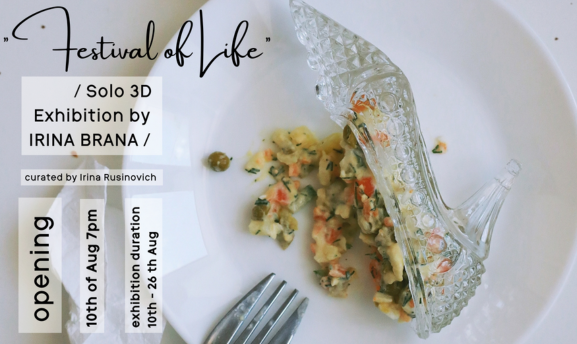
27.07 – 12.08 «Festival Of Life»Still life Collective  3D Exhibition  

Deadline 09.July 

03.08 – 17.08 „Sartorial Lens: A Contemporary Homage to Fashion Photography Icons“ 

Deadline 22.July 

For the PRINT or/and DIGITAL feature opportunity at PURPLEHAZE MAGAZINE 009  click here 
For participants from other cities:

Delivery and packaging of originals in both directions to the gallery (Berlin GER)  and back at the expense and responsibility of the Artist.

For artists:

– Participation in the exhibition, organizational Fee of 60 – 135 Euro depending on wanted options and exhibition type. 

– Installation/Dismantling by the gallery (except HAZE BAZAAR Fair)

– E-newsletter and Social Media promotion (21,000+ gallery&magazine subscribers)

– Gallery-designed e-invites for artist distribution

– Opening and Closing  Reception

– Photo Reportage of the event 

– Press release and promotion via press partners 

– Details of the exhibition on our website

– Pricing advice and sales support

– Curatorial advice

– Wall-mounted artist statement and artwork listing

– Post about each participant in the social networks of the organizer; (optional)

– Commission of the gallery for the sale of works – 30% for in-person and 25%  for 3D exhibitions. 

Works are accepted in any genre, in any technique and media,

graphics, watercolors, sketches, photos, collages, and canvas.

APPLICATIONS are accepted by emailing contact@haze.gallery with the subject of the exhibition you are interested in.

1) Send your info:

Bio, CV, City, links to social networks + a short text of intent.

2) Send photos of your artwork, and sign each one in the file name before you send it:

Title size materials cost.jpg

(Title 70×50 cm oil on canvas 700 EURO .jpg)

3) Payment of the entry fee is due once your application is approved; the number of places/walls is limited!

Any questions:

contact@haze.gallery

+49 (0) 1746127171

A STUDIO VISIT: Exploring the artistic process with Marina Koldobskaya

By /ART/, /INTERVIEW, /NEWS/

Text by Irina Rusinovich 

A STUDIO VISIT: Exploring the artistic process with Marina Koldobskaya

Can you tell us about your creative process, from the moment you come up with an idea to the finished painting?

I have a number of motifs that are important to me, which I have been working on for many years. These are motifs that express something important, something basic to human beings. They have become stamps, mastered by popular culture, and I work with these stamps.

The red bull, for example, means power, masculine intensity, and aggression, but also a sacrifice, meat. It is with human beings from the Paleolithic cave to the label on the bottle of wine „Bull’s blood. Or the rose. It has been painted for thousands of years because it is a vagina, a symbol of seduction, desire, and pleasure. Blue flowers mean peace, oblivion, and heaven.

The cat and mouse – murderer and victim, nature’s indifference, „life is life.“

I do not paint real things, I try to create a kind of sign, a symbol of the experiences they evoke, to express visually Plato’s idea of these things.

Cézanne once said that painting is thinking with a brush in hand. That’s how I stand over my canvases or papers with a brush and ponder. I make endless versions, variations, and transformations… I repaint, and start over to make the image more precise, and more expressive. And simpler. It’s very difficult to make it simple. It is like calligraphy – you have to practice it for a long time, for years, in order to complete your artwork very quickly, with a few spontaneous movements, easily, powerfully, and beautifully. I am not afraid of beauty, unlike many artists today. Plato’s idea has to be beautiful.

Photo Credit / Johannes Pol 

How do you integrate or address environmental and social themes in your artwork?

The themes come by themselves. There’s the war that Russia runs against Ukraine, it’s horrible, people are dying, and my paintings are getting red, just streams of blood flooding the paintings. And there is a lot of black. And I also started painting people. Before, people as such were not my subject. Of course, my flowers and animals were anthropomorphic, but that was about the unity of all creation, the reflection of everything in everything.

And now in my works, people are exactly people, human beings, as they are. They are alive, wounded, dead, singly, in crowds, whole, and torn into pieces…

Can you walk us through a current project you’re working on and share your goals for the piece?

My latest series is about humans being a sick, insane animals. A crazy ape with a gun…

We are creatures who have created a brave new world and don’t know what to do with it. Scared to death of ourselves. People are simultaneously building a bright future and tearing themselves back into the cave. It seems that people today are losing ground under their feet faster than they are finding new ground.

I left Russia, and I last year was working on a series Migrants. It’s about the loss or change of identity, of homeland, of destiny.

The series I’m doing now has no name yet, for myself, I call it Primates for now. They are such incomprehensible creatures, like monkeys, or dolls, or children, or monsters… and at the same time, their composition should refer to recognizable examples of high art.

Marina Koldobskaya and Irina Rusinovich , Photo Credit / Johannes Pol 

What role do you think art plays in society, and how do you hope your work contributes to that dialogue?

For several months now, my colleagues and I have been preparing a joint exhibition of women artists from Ukraine, Belarus, and Russia, it calls Heartbeat, at Wolf&Galentz gallery. Finding like-minded people was not easy, many friends said that in today’s atmosphere of mutual hatred and suspicion, we would be eaten alive.  And that there would simply be no artists who would agree to participate.

But I think it’s very important to do an exhibition like this, precisely because it’s an attempt to confront the hatred that’s all around us. And I’m very glad we have found like-minded people and support from the gallery, we help and support each other, we are our own authors and curators, we decide everything together, and we cooperate despite the war – this is the most important result.

Photo Credit / Johannes Pol 

What are some upcoming projects or shows you’re most excited about?

This is the „Heartbeat“ exhibition I mentioned earlier.

Now people are overwhelmed with pain, it has to find a way out. It has been a year of horror, shame, despair, waiting, hope… None of us has ever had this experience of collective distress. Different artists look for different ways to express these experiences in their art. Straightforward experiences are long forgotten – crying, wailing, praying – are returning to art now. Perhaps it’s a bit awkward and even ugly, now is not the time for good taste and finesse.

I don’t think art is capable of fully embracing this experience at once. A new aesthetic will come, it’s already coming. It’s impossible for an artist to do anything else these days. For me for sure.


Follow Marina at FB  and Instagram 

Broemaand “WATCH ME RISE”

By /FASHION/, /NEWS/

WATCH ME RISE

Photographer Broemaand @broemaand
Stylist Josephine Herfst @j.herfst
Make up artist & Hair Shakira @shakira_mua
Model Hugo @hugovanboven @innocencemodelagancy 
Studio @studioletterie

LOOK 1 Hat Marianne Jongkind @mariannejongkind Mesh top Object & Dawn @objectanddawn Leather pants Tim Couwenberg @tii______________ Shoes Filling Pieces @fillingpieces LOOK 2 Hat Marianne Jongkind @mariannejongkind Rings The pool jewelry @thepooljewelry

LOOK 1 Boots stylist archive Leather pants Afura @afurastore Crop tops Paulina Meyle @paulinameyle Chain necklace The pool jewelry @thepooljewelry LOOK 2 Chain necklace The pool jewelry @thepooljewelry

Look 1 Green hat Marianne Jongkind @mariannejongkind Rings The pool jewelry @thepooljewelry Look 2 Hat Marianne Jongkind @mariannejongkind Mesh top Object & Dawn @objectanddawn Leather pants Tim Couwenberg @tii______________

Look 1 grey skirt Vanderwilt-Amsterdam @vanderwiltamsterdam Necklace The pool jewelry @thepooljewelry Boots stylist archive Look 2 black hat Marianne Jongkind @mariannejongkind grey skirt Vanderwilt-Amsterdam @vanderwiltamsterdam Boots stylist archive

Green hat Marianne Jongkind @mariannejongkind Rings The pool jewelry @thepooljewelry

Interview with Vadim Vasilis

By /FASHION/, /INTERVIEW, /NEWS/

Vadim Vasilis  /photo , Issa Tall /   text,  Irina Rusinovich

Interview with the Paris-based model Vadim Vasilis
What does it take to be a model today? How does one get there, how does one keep fit and stay inspired? We have talked to Vadim Vasilis, a French-Greek model in Paris, about what drives him, and what he is working on at the moment
What made you want to become a model?

I came back from Bulgaria where I was doing a training course before the soccer season, in full questioning and psychological fatigue, I returned to Greece, where I realized that I had reached my limits concerning my career in soccer.

When I came back, I told myself that I was going to refocus on my goals, and it was at that moment, during a party in Greece, that a lady asked me if I was interested in fashion and I confess that I had never thought about it before. From then on, my view on what I wanted to do with my life changed, I said to myself why not, I wanted to change my life, I was no longer happy in what I was doing in the past, I was tired and worn out of this life while another one opened its arms to me.

Vadim Vasilis, photo Fabien Caudy

Being an international model, how has your life changed? 

I’m just starting out, whether it’s international or not, I for one haven’t seen or experienced anything, I still have everything to prove, but regardless you have to give it your best shot.

I suppose that the international would make me spend more time in transport and that I would have to work more on my dark circles with the jet lag.

No more jokes, the international induces the knowledge of the habits and customs of the different countries I will travel to in order to adapt myself, but always in the spirit of staying true to who I am.


You are from Greece, what are your 3 favorite places in your country and why?

My mountain in the Peloponese, a dry, arid place in the middle of nowhere, without any comfort. I lived there for part of my childhood with my grandparents. It is an isolated, rustic place with a mystical atmosphere, it is where everything started for me, I was marked by this period of my life and it is the basis of what I embody today.

 The various creeks near the family village in the Argolid I learned to swim, to fish following the example of my father who fished octopus, various fish and shellfish with his harpoon. In the evening, we would stay by the sea in a „caliva“, a small wooden hut that a close friend of my father had, where we would grill our catch of the day while watching the sun set.

The family village in Greece had this summer atmosphere, where we ate meals together, where I was constantly invited to eat everywhere, an active lifestyle, from getting up in the morning where I liked to go with my uncles, to the goats and sheep in the mountains, to our time spent at the beach. Soccer games would be set up when the temperature started to drop, then going home, showering outside with the hose, and finally going for a walk in the evening.

Vadim Vasilis, photo Issa Tall

How do you maintain your physique?

Sport and a healthy lifestyle!  I mainly do cardio to lengthen the muscles and draw on stored fat, I supplement a little with muscle strengthening.

My background in sports allows me to know what I need to work on. But for the time being, I do a lot less weight training than before, the goal is to be slim but not thick, so for that I exercise with much lighter weights. And I do long sets.

What brand would you like to work with in the future?

Very interesting question! There are a lot of artists I would like to work with:

Marine Serre for her esoteric and mystical touch

Balenciaga for the underground side

Jean-Paul Gaultier because he manages to make harmonious what is scattered.

But many others, Vivienne Westwood, undercover, Ambush, in fact I have so many brands that correspond to my way of being and my universe, even young designers that many ignore for the moment, but who are so talented.

We all have our difficulties to accomplish our goals, what are yours?

My impatience above all.

I admit that I am a difficult character to understand, I am my true and proper enemy, but also my true and proper brother. Everything is paradoxical about me.

I am a character who is always thinking, intense, and complicated to temper, my sensitivity often has the upper hand on me, but I will manage to tame it.

Vadim Vasilis, photo Raphael de l´Orme

Can you tell us the funniest or most interesting anecdote that happened to you since you became a model ?

That’s not a simple question, because there is really a lot of intensity in this business, so much movement, everything is ephemeral except, of course, some of the encounters you can make, but unfortunately I don’t have anything else that comes to mind right now.

You have a lot of tattoos, tell us about your three favorites.

I do have a lot of tattoos, all of them have their meaning, but it’s my secret garden 😉

I remain very mysterious and modest about some things concerning me, I reveal myself with time to people who inspire me, I trust my intuition, however my body is a rebus, when you know a little my life, my essence, you can try to play with what you see, but I remain intimate.

Is it an obstacle to have so many tattoos on your body as a model?

Yes and no, it depends on the artistic direction, the designer, the work required. It can be a brake as the opposite, but it is the game, after that it depends also on what you give off as energy, it is a whole. But you need something for everyone, you just have to be subtle.

What is your work rhythm at the moment?

Intense, at the very moment I’m writing this interview, I’m on various things at the same time, it’s not easy, you have to be organized and of course very well accompanied and I thank Nadine Dinter who takes care of my image today, who is there for me, who helps me, supports me, gives me a lot of advice, I thank life for having put Nadine on my way, it’s an encounter from elsewhere and I think we will be brought to collaborate for a long time on several projects.

             Vadim for @stephanethakid Paris 2022                                                                                                                           Paris 2022Vadim for @gillesasq, Paris 2022

How do you relax?

It is difficult for a hyperactive person like me to relax…

I’m always thinking about different things, I always have ideas in my head, I’m full of desire and energy, to go ahead, to work, to do sports, to discover, so to relax is not an easy task, even when I take a break I feel like I’m wasting my time.

But I will have time to relax when I have accomplished what I have to accomplish…

For the moment I am in full work, no time to sleep.

What are your current/upcoming projects?

I have a lot of projects going on: magazines, advertising campaigns, fashion week to prepare. It’s an environment where you have to be reactive at the moment…

The universe is vast, it’s up to me to make the right choices and to be receptive and attentive to the signs of life.

Follow Vadim on IG at @vadimvasilis

Andrea Varlaro „SAUDADE“

By /FASHION/, /NEWS/

SAUDADE

Photographer Andrea Varlaro @andreavarlaro
Photographer Assistant Diana Matalucci @dianamatalucci
Stylist Giuseppe Troncone @gggiuseppeee__________
Stylist Assistant Mariachiara Civitella @mariachiara_civitella
Make up artist & Hair Carla Martino @skarlatta_makeup_and_hair @makingbeauty.management
Model Iris Natale @irisnatale @bravemodels
Production Palazzo Studio @palazzo.studio

Total look Carolina Popa @carolina.apop; Coat Aenema  

Dress Giulia De Santis @gl.dsn; Total look Carolina Popa @carolina.apop

Total look Stylist Archive

Dress Giulia De Santis @gl.dsn

 Total look Carolina Popa @carolina.apop; Dress Giulia De Santis @gl.dsn

Top Stylist archive Slip bikini Josàn @josan_official

Taya Jevtic „IN THE SHADOWS“

By /FASHION/, /NEWS/

IN THE SHADOWS

Art direction & photography: Taya Jevtic @tayajevtic
Creative director and Fashion stylist: Miguel Maldonado www.miguelmaldonado.net @miguelmaldonadostylist
Make-up and hair: Rafa Delgado @rafadelgado.makeup
Model: Dana Herfurth @danaherfurth

Jacket and skirt-FADE OUT Label @fadeoutlabelwww.fadeoutlabel.comBlouse-Manakaa Project @manakaa_projectwww.manakaaproject.comHigh heels–H&M @hm

Trench coat–FADE OUT Label@fadeoutlabelwww.fadeoutlabel.comBlouse-Manakaa Project @manakaa; Trench coat–VERO MODA @veromodaBlouse-Jihun Ko @i_dnttSkirt–FADE OUT Label@fadeoutlabel www.fadeoutlabel.com

Blouse-VERO MODA @veromodaMesh jacket-FADE OUT Label@fadeoutlabelwww.fadeoutlabel.comSkirt and chaps-Jihun Ko @i_dnttHigh heels-H&M @hm

Jumpsuit – FADE OUT Label @fadeoutlabel www.fadeoutlabel.com Blouse – Manakaa Project @manakaa_project www.manakaaproject.com; Jeans – FADE OUT Label @fadeoutlabel www.fadeoutlabel.com Blazer – ONLY @only_official

Dress – Manakaa Project @manakaa_project www.manakaaproject.com Gloves – Jihun Ko @i_dntt

Suit – JJXX @jjxx_official High heels – H&M @hm

Interview with photographer Alexander Platz

By /ART/, /INTERVIEW, /NEWS/

Text by Lyubov Melnickowa

Interview with photographer Alexander Platz

Tell us a little about yourself. As an art photographer, you have a very unusual background. Please tell our readers more about it.

My name is Alexander Platz and I was born in Berlin. In 1984, when I was nineteen, I joined the Berlin police force. At the time, I had no exposure to art whatsoever. I loved the training and the job, because I enjoyed working with people back then, too.

My first encounter with creative work came in the nineties, when I wrote novels and short stories, as a kind of contest, with friends who worked as actors. This is also how I got started working as a consultant, training actors for their roles, while still continuing my police work. One of my friends was the antagonist in the police series “Die Wache”. Later, I completed a project on “Operational Training for the Berlin Riot Police”. Here, I was the idea generator, scriptwriter and director, and was responsible for the production and presentation of a 15-minute film about the results.

In the meantime, as a fully fledged police officer, I devoted several years to pursuing my conventional career with the police. In 2004, after a work-related accident (resulting in post-traumatic stress disorder), I found my way to photography, quite by chance. I fought against the trauma-related flashbacks by taking photos that formed new images in my head and helped me find my way back to my emotions. I had absolutely no idea about photographic techniques and wasn’t interested in them. I just wanted to take photos, and was on the „hunt for my inner self“. During this time, I only learned the techniques that I really needed. My pictures from this period always had a sombre aspect. My works included portraits, nudes, erotic studies, dance photography at the Friedrichstadt-Palast revue theatre in Berlin, and portraits of boxers. Sometimes, I think I’ve always been searching for human biographies, encounters and experiences through my work, to learn more about life.

Upcycling Fashion

In 2016, it occurred to me that with my people photography I’d dabbled in just about everything except fashion. I’m not a fan of talking about things that I’ve never delved into before. So the first thing I did was start researching, and I emersed myself in this via YouTube. I asked myself how I could combine fashion photography with my interest in people and their expression.

Because I want to be independent in my work, I decided to go against the traditional path of working with designers and stylists.  I wanted to develop my own interpretation of people and fashion in my photographic world and find my personal visual language.

By happy chance, I stumbled upon a documentary about “anti-fashion” and “grunge”. I’m also a big fan of the English “mod” subculture and its development through to today. There are many facets of the world of fashion that can be traced back to these influences. I could identify with a lot of this, since my own style of dress and my lifestyle are based on this subculture. And so, the idea of using this as a starting point began to grow.

As I browsed through Berlin’s second-hand shops and bought clothes; I learned everything I could about what interested me and about fashion. I used, and still do use, international magazines, YouTube documentaries, books and interviews. And then I started the photographic work. This is how the visual language and aesthetics that I still use today came into being.

At the same time, I was also working on my “My Japanese Faction” project. Here, I was able to process my fascination with Japanese aesthetics, my enthusiasm for Yoshi Yamamoto, Nobuyoshi Araki, Takeshi Kitano and the Japanese samurai period. My fascination is fuelled by the pervasive interaction between the exterior and the internal feelings in Japanese history and the present day.

All these experiences come together in my current upcycling project: “Fairy Tale Dreams”.

In 2010, I left the police force and focussed entirely on photography and art. 

As a self-taught artist, I was admitted to the Professional Association of Visual Artists Berlin (bbk) in 2019, and so recognised as a professional artist.

In the meantime, I find it artistically exciting and fulfilling to blend all aspects of photography, art and design.

My current project, “Fairy Tale Dreams”, is the canvas for this. Here, everything flows together. Photography, fashion, upcycling design, and painting for set design.

All of this is what led me to take part in the Haze Bazaar in March 2023.

Upcycling Fashion

From 1993 to 1996, you studied public law at the Berlin School of Economics and Law. Why didn’t you opt to study art? Do you have plans to do this in the future? Do you think that a photographer needs some kind of formal education?

My studies took place while I was still active in the police force and they served to advance my police career. I had no involvement with photography or art at the time. However, a lot of what I learned was, and continues to be, useful to me in my artistic development. Organisation, research and scientific work are all brought to bear in my development. I used these skills to work my way into every topic, and I came up with results on both a rational and emotional level. Actually, it was a self-organised course of study.

This has both advantages and disadvantages. The network and content that a traditional art course offers were missing. I work hard on this, however, in parallel to my actual work. On the other hand, my actual degree, and also my work as a teacher at the police academy, are an advantage when it comes to structured planning and communication with my project partners and the preparation of exhibitions.   

But doing a traditional course in art or photography was something that never occurred to me. My medium, photography, and the development of the internet made it possible for me to choose my own direction and to evolve. These days, I’m so deeply involved in my development that I won’t take a university degree course.

I think that training or a degree in photography can be important. It’s good if someone is interested in that and goes ahead with it. Photography and art are so extensive that you can learn many things that you won’t learn if you’re self-taught. On the other hand, teaching yourself allows you to determine everything yourself and to put all your energy into pursuing your own ideas and dreams.

But, whether you choose the classical or the autodidactic path, a good foundation of discipline is necessary to keep moving forward and learning. 

I think it’s great that today we have the option of choosing our own path.      

Your work depicts women. Why women? Do you think it’s easier to convey the beauty of a female image in photography than a male one?

I do photograph men, too, such as dancers, boxers, actors and other creative people. 

But my main focus in on working with women. For me, they symbolise the very origin of life. In many of my fashion works, you can see the female breast. This isn’t so much erotic as symbolic of this aspect of women’s lives as a beginning and as self-confidence, and it supports the overall expression of the works. Women are closer to their emotions and more courageous in interpreting and displaying them when working in front of the camera. Our work together is mostly a “dance”, in that there aren’t many set poses. In fashion photography, I apply the experience I gained in dance and boxing photography. For me, it’s a search for that “unexpected moment”.  We follow each other. And in doing so, we challenge each other in our respective roles. It’s a highly concentrated process. Quite often, I’m physically and mentally exhausted after a photo shoot. This way of working together so freely is what gives the photographs the special expression that reflects my idea of beauty, aesthetics and female self-confidence. I love this process.

With men, the projects are also very intensive, but working with women is closer to my heart and more fulfilling.

Upcycling Fashion

Your works have a certain style. How did this style take shape?

Because my first steps in photography were taken alone and without any rules, I was initially particularly fascinated by the Surrealists and Dadaists of the 1920s and their approach to images. The freedom of Dadaism and Surrealism gave me space to experiment and develop. The expression and effect of a work were more important to me than the classical photographic process. The camera is, and remains, simply a kind of pen or brush that I can use to capture whatever fascinates me. It was in 2007, when I worked on a project in the Friedrichstadt-Palast in Berlin with the ensemble, that the idea of the “unexpected moment” took hold of me for the first time. That fraction of a second, in which you capture the perfect position in a sequence of movement. Thanks to my “stage photography”, I learned to “feel” or anticipate the moment just before this perfect position and to take that shot. I continued to improve this skill in my later work in boxing.

A further aspect, here, is my continuous learning. During my many years of research and image analysis, I found my own style. One of my self-selected “professors” was the celebrated Diana Vreeland. She said: “The eye has to travel!” To paraphrase: as a photographer, you can be anything but don’t be boring!

All these various aspects allowed me to find my style. I’m curious about how it will continue to develop and excited to see where the next few years will take me.

What’s the most important aspect of photography for you?

The freedom to realise and portray my ideas. To give them a material form. In preparation and implementation as well as in the subsequent retouching. It always moves me forward and allows me to learn more in order to express my feelings. Here, I’m guided only by myself. I reject all forms of dogma and ideology. I celebrate self-fulfilment through the freedom of art.

And I love meeting and working with people.

You teach photography at the Community College Berlin Treptow Köpenick. What motivated you to start teaching?

Since I’ve dedicated myself to artistic photography and have never undertaken any commercial work, ensuring the financial viability of my projects is a major issue. Teaching allowed me to earn part of my budget. I knew from my past endeavours that teaching was something I enjoyed. So, as well as benefitting from the financial aspect, I found the teaching very stimulating and a distraction from everyday life.

These courses also give me an incentive to keep learning and to keep evaluating the courses. My students include both amateurs and professionals. In the lessons, their thoughts also provide me with new perspectives. It’s a give and take situation for all concerned.

All this motivates me, time and time again.

What do you think is the most important thing students can learn from your lessons?

The world of photography and art is so multifarious. I introduce them to my world of photography, my ideas and my imagination, to expand their vision. There’s no right or wrong. It’s all about their development. “Why do I take photographs?” “What subject really interests me?” “How can I follow my chosen path?” “How can I find and maintain enjoyment in it?”

I try to expand their outlook, to arouse their curiosity.

To link everything together and not to think one-sidedly in genres.

I’d like them to leave the course with a sense of great curiosity and freedom and to follow their own personal path.

As I’ve been teaching since 2018, I’ve received quite a bit of feedback over the years. My students love this approach. Some of them keep coming back to my courses because they can’t find anything with similar content and they want to keep learning.

Do your works have a message? What thoughts do you want them to evoke?

That’s a difficult question. Because my works are always a result of my current thoughts, feelings and inspirations. And the interpretation of the performer is usually a factor, too. 

I don’t think I aim to evoke any particular thoughts. It’s more a matter of emotional reactions and interpretation. Thoughts tend to take second place here.

Each of us has a different biography, world of experience, and interpretation. This is why I’d like viewers to feel an emotional connection to the work in the first instance. This could be positive or negative. The most important thing is the emotional reaction.

Here, too, I work from the premise of the freedom of the individual. I’m always delighted when viewers share their reactions with me and we can discuss them.

Tell us about your creative plans for the future? 

I want to continue developing my “Fairy Tale Project”. There’s still so much to discover there. At the moment, I’m working with Islamic women on a project about Islamic fashion and the “hijab”.

Every day, a new idea materialises, and I write it down in a small book. 

I’m also heavily involved in the current discussion about nudity in art and the public arena. For me, a tendency toward restriction is emerging, moving toward a “phase of apparent moral prudishness”.

I have a project in mind, which would involve exploring this and would bring together and interpret the aspects of nude photography, erotic photography and pornography on an artistic level. 

The working title is “Por-nu-graphy?!”, derived from the terms pornography and nude. But these works, too, will take a subtle rather than an “in your face” approach.

And then, I’m always busy interpreting my ideas on the English subculture of the sixties and seventies in photographic terms.

So, I still have quite a lot of plans and hope to be able to bring them all to fruition.